-Anjali Vats and Anita Tomar
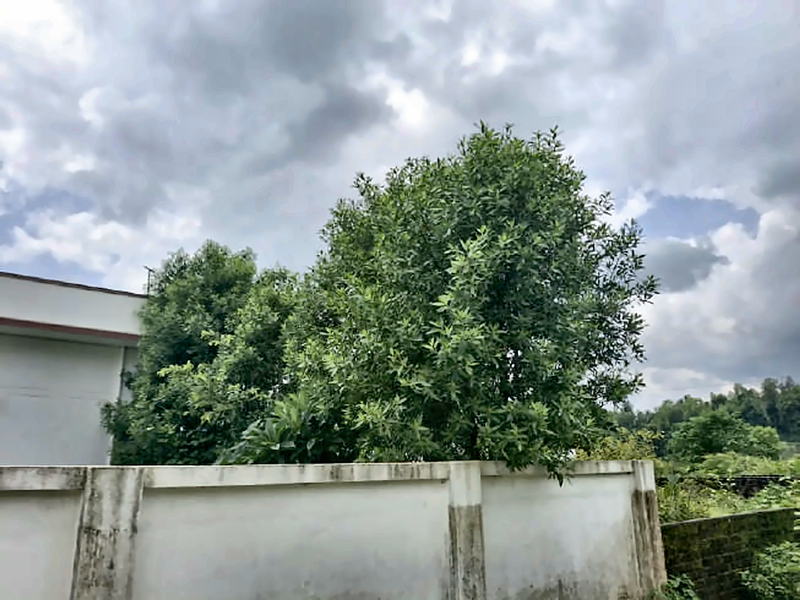
Trees are often treated as a symbol of environmental protection. In a country like India, where urban heat, air pollution, land degradation, and climate variability are growing concerns, planting trees is understandably seen as a simple solution. But not every tree suits every landscape. The choice of species can determine whether a plantation strengthens an ecosystem or gradually creates new ecological problems. One such tree at the centre of this debate is Conocarpus lancifolius Engl., popularly known simply as Conocarpus. Over the past decade, Conocarpus has become increasingly visible in Indian cities, along roadsides, on institutional campuses, on highways, in parks, and other urban spaces, particularly in warm, relatively dry regions. Its rapid growth, evergreen nature and tolerance of harsh environmental conditions have made it attractive for landscaping and greening programmes.
Yet the same characteristics that make Conocarpus attractive-rapid growth, hardiness and tolerance to drought, heat and salinity-have also raised ecological concerns. Recent discussions among ecologists and policymakers have questioned whether widespread planting of this non-native tree is appropriate in Indian landscapes. As of 2026, Conocarpus does not have a formal invasive alien species designation in India, although invasion biologists have suggested treating it cautiously as an “emerging invader” until its ecological behaviour in India is better understood.
Botanical and Ecological Characteristics of Conocarpus lancifolius
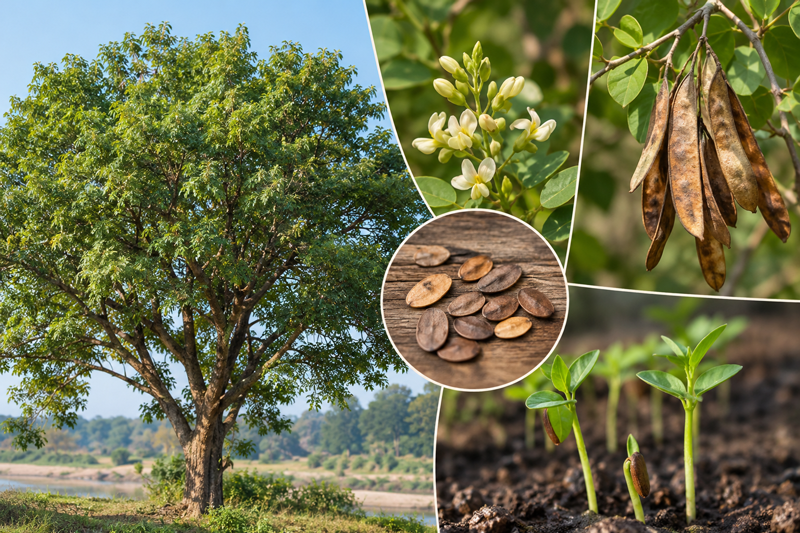
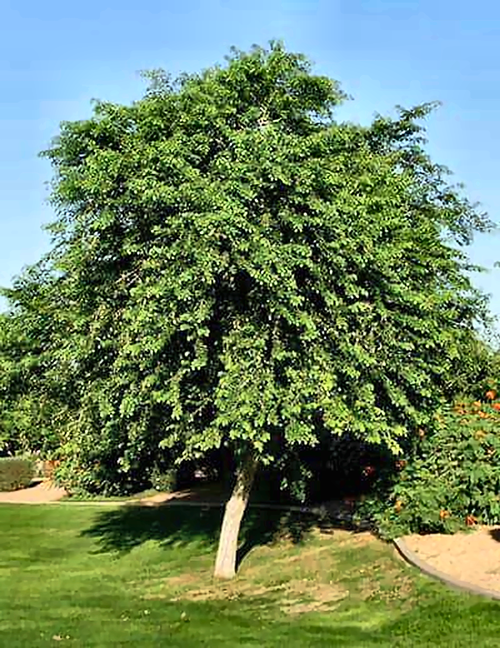
Conocarpus lancifolius belongs to the family Combretaceae, which includes ecologically and economically important Indian trees such as Terminalia and Combretum. It can grow as a tree up to approximately 10 m tall, with lance-shaped leaves and small flowers arranged in compact heads.
The species thrives in difficult environments. Studies have demonstrated its ability to withstand combinations of high temperature, drought and salinity. Physiological studies indicate that the plant modifies its antioxidant system in response to environmental stress, enabling it to maintain physiological function under harsh conditions.
This makes Conocarpus particularly well-suited to arid and semi-arid urban environments, where many conventional ornamental species struggle to survive.
It is also useful to distinguish C. lancifolius from Conocarpus erectus, commonly known as buttonwood or button mangrove. The two species are frequently discussed together in public debates, but they are different species with different native distributions. C. lancifolius is native to eastern Africa, whereas C. erectus is native to tropical and subtropical regions of America and western Africa.
This distinction matters because scientific assessment should be species-specific rather than based solely on the name “Conocarpus.”
Factors Contributing to the Increasing Use of Conocarpus lancifolius in India
The use of Conocarpus is partly driven by urban India’s demand for trees that can withstand harsh conditions. High temperatures, compacted soils, limited rooting space, irregular irrigation, and pollution increasingly characterise Indian cities. Roadside plantations are especially challenging because trees must withstand heat, water stress, and restricted soil volume.
Conocarpus appears attractive under such conditions because it grows relatively quickly and retains green foliage for much of the year. It also tolerates environmental stress. These characteristics have encouraged its use as an ornamental and avenue tree. The problem arises when survival is treated as the sole criterion for selecting a plantation species. A tree may survive exceptionally well in a city yet still provide fewer ecological benefits than a diverse assemblage of native trees.
The large-scale introduction and planting of a non-native tree species require careful assessment of its ecological performance and potential interactions with the recipient ecosystem. For Conocarpus lancifolius, it is essential to observe its interactions with native biodiversity, including its capacity to support native insects, birds, and other associated fauna, as well as its contribution to local food-web dynamics. The potential for natural regeneration and establishment beyond designated planting sites should also be evaluated to determine its capacity for persistence and spread under Indian environmental conditions.
Furthermore, assessing the species’ water-use requirements under varying climatic and edaphic conditions is important, particularly in water-limited regions. Its influence on the regeneration, growth and composition of native vegetation, together with possible effects on soil physicochemical properties and below-ground ecological processes, may also be examined. Long-term monitoring is necessary to determine whether extensive planting could facilitate uncontrolled establishment or create management difficulties.
The ecosystem services provided by C. lancifolius, including carbon sequestration, biomass production, microclimate regulation, and other potential environmental benefits, may also be evaluated against those of locally adapted native species. Such a comparative assessment can provide a more objective basis for determining the suitability of C. lancifolius for specific plantation and urban-forestry contexts. Therefore, species selection may be guided by site-specific ecological assessment, long-term monitoring and evidence-based evaluation of both benefits and potential environmental impacts, rather than by growth performance or aesthetic characteristics alone.
Conocarpus: Why it can be a boon
1. Tolerance to harsh environments
A major advantage is its ability to tolerate harsh environmental conditions. Research has shown physiological adaptations to drought, salinity, and high-temperature stress. For urban landscapes where water availability is uncertain, such resilience can be valuable.
2. Rapid establishment
Fast-growing trees can provide quick shade and vegetation cover. In degraded landscapes, rapid establishment can help reduce exposed soil and improve the landscape.
3. Timber and fuel value
Outside India, the species has been used for timber, charcoal and fuelwood. FAO’s Ecocrop database also lists uses including shade and shelter, timber, fuelwood and charcoal. Thus, from a strictly utilitarian perspective, Conocarpus has several characteristics that explain why it has been promoted.
Conocarpus offers many benefits. But the real question is whether these benefits justify large-scale planting in Indian ecosystems.
Conocarpus: Why it may become a bane
The primary concerns relate to non-native status, potential ecological dominance, water use, biodiversity and inappropriate plantation design. A non-native tree is not always invasive. It becomes invasive only when it establishes, spreads and causes significant ecological, economic or social impacts.
Therefore, merely saying that Conocarpus is “foreign” does not scientifically prove that it is invasive.
Recent assessments indicate that Conocarpus has not been formally classified as an invasive alien species in India. However, because it has been increasingly planted and its long-term ecological behaviour remains insufficiently studied, experts have recommended treating it cautiously as an emerging invasive species.
Threat to native biodiversity
The greatest ecological concern with large-scale monoculture is the replacement of native vegetation. Native trees have co-evolved with local insects, birds, fungi, microorganisms and herbivores. A diverse native plant community therefore supports a network of ecological interactions that a single introduced species may not replicate.
If large areas are converted into Conocarpus monocultures, plant diversity may decline and habitat structure may simplify. This concern is particularly significant because India already bears a heavy burden of invasive plants, underscoring the importance of managing introduced plants.
However, evidence that Conocarpus is displacing native vegetation in India remains limited. Reports of expanding plantations and concerns about ecological displacement justify caution, but they should not be treated as definitive evidence of a nationwide invasion.
Water Use and Drought Tolerance of Conocarpus lancifolius
One of the most common criticisms of Conocarpus is that it is a “water-guzzling” tree. Conocarpus is drought-tolerant, but drought tolerance does not mean zero water requirement. A fast-growing evergreen tree inevitably requires water to produce and maintain biomass. Actual water consumption depends on tree size, climate, soil, rooting depth, planting density, and the availability of groundwater or irrigation.
Nevertheless, water-use considerations are highly relevant in India’s dry regions. Planting dense stands of any fast-growing tree in water-stressed landscapes should be evaluated through water-balance and evapotranspiration studies, rather than assumptions.
Interestingly, research on invasive trees in semi-arid India has already shown why tree species selection matters for water security: studies comparing alien and native trees have found substantial differences in water use.
For Conocarpus specifically, India urgently needs field studies comparing its water-use efficiency, transpiration and groundwater interactions with those of native alternatives such as Azadirachta indica, Prosopis cineraria, Salvadora spp., Acacia spp. and other locally adapted species.
Human Health Considerations:
Concerns about the potential effects of Conocarpus on human health have attracted considerable public attention; however, these claims require careful scientific evaluation. Pollen production alone does not establish that the species causes clinically significant respiratory disorders at the population level. Establishing a causal relationship requires evidence from pollen characterisation, exposure assessment, allergenicity studies, clinical investigations and epidemiological research. Consequently, claims that C. lancifolius universally causes asthma or other serious respiratory illnesses should not be presented as established scientific facts without species-specific evidence. At the same time, urban tree selection should not overlook potential public health considerations. Factors such as pollen production, flowering phenology, allergenic potential and the proximity of plantations to densely populated areas may be considered when planning urban vegetation. A systematic, evidence-based assessment of these factors would provide a more reliable basis for understanding the relationship between C. lancifolius and human health. It would help distinguish scientifically established effects from assumptions or anecdotal observations.
Ecological Implications of Monoculture Planting
One important ecological consideration of extensive Conocarpus lancifolius planting is the potential reduction in vegetation diversity when the species is established as a monoculture. High tree cover alone does not necessarily indicate ecological restoration, as ecosystem functioning also depends on species diversity, structural complexity, and interactions among plants, fauna, and soil organisms. Roadside plantations dominated by a single tree species may provide substantial visual greenery and shade but offer comparatively limited habitat diversity compared with multilayered vegetation comprising native trees, shrubs, herbs and ground-cover species. Species-rich, structurally diverse vegetation can provide a broader range of ecological niches and support greater diversity of associated organisms. Therefore, where C. lancifolius is used in urban or other managed landscapes, incorporating it into a diverse, well-designed vegetation system may be more ecologically beneficial than extensive use as a single-species plantation. The selection and proportion of C. lancifolius should consequently be guided by site characteristics, ecological objectives and the need to maintain vegetation diversity.
Conclusion
Conocarpus lancifolius exemplifies both the potential benefits and ecological considerations of introducing non-native tree species into new environments. Its rapid growth, evergreen habit, tolerance of drought, salinity and high temperatures, and biomass potential make it a useful species for selected landscape and plantation settings. At the same time, site conditions, planting density, water availability, and interactions with existing vegetation influence its ecological performance. Its long-term effects on biodiversity, soil processes, water use, natural regeneration and associated fauna across different Indian environments require continued scientific evaluation.
The ecological significance of C. lancifolius should therefore be assessed based on its site-specific performance rather than on a universal classification as either beneficial or harmful. A species that performs well under harsh environmental conditions may have considerable value at a particular site. In contrast, extensive planting in ecologically sensitive or species-rich landscapes may have different consequences. Similarly, rapid growth and year-round foliage are useful landscape attributes but do not, by themselves, determine the ecological value of a plantation.
The case of C. lancifolius also underscores the need to evaluate plantations beyond conventional indicators such as survival and growth. Ecological assessment should consider vegetation diversity, habitat structure, water-use characteristics, soil properties, carbon storage, regeneration behaviour, and interactions with native flora and fauna. Comparative studies with locally adapted species can further clarify its ecological performance under different climatic and edaphic conditions.
Overall, Conocarpus lancifolius has both useful attributes and ecological implications, so its suitability depends on the intended purpose and environmental context. Rather than universally classifying it as beneficial or harmful, scientific assessment grounded in long-term field observations and measurable ecological parameters provides a more suitable framework for understanding its role in Indian landscapes. Ultimately, effective greening depends not only on the extent of tree cover but also on the capacity of planted vegetation to support diverse, functional, and resilient ecosystems.
References
- Kew Science. Conocarpus lancifolius Engl. Plants of the World Online.
- Redha, A., Suleman, P., Al-Hasan, R. and Afzal, M. (2012). Modulation of antioxidant defences in Conocarpus lancifolius under variable abiotic stress. Biochemical Systematics and Ecology, 43, 80–86.
- Redha, A., Suleman, P., Al-Hasan, R. and Afzal, M. (2012). Responses of Conocarpus lancifolius to environmental stress: a case study in the semi-arid land of Kuwait. Phyton.
- Invasive alien plants in South Asia: Impacts and management (2023). NeoBiota, 88, 135–167.
- The plural realities of plant invasions in India: A review of impacts to wellbeing (2024). Environmental Development, 51, 101003.
- Patra, S., Kishore, B. S. P. C., Kumar, A., and Saikia, P. (2025). Distribution mapping of major invasive plant species of India and their role in ecosystem alteration: A systematic review. Discover Forests, 1, Article 49.
- Mongabay-India (2026). Why is Conocarpus being banned across states?
- FAO Ecocrop. Conocarpus lancifolius species datasheet.


Author are:
NWFP Discipline
Silviculture and Forest Management Division
ICFRE-Forest Research Institute, Dehradun