The forests may be where wildlife lives, but the connections between them may determine whether it can survive.
– Dr. Sujata Upgupta
THE JOURNEY BETWEEN FORESTS:
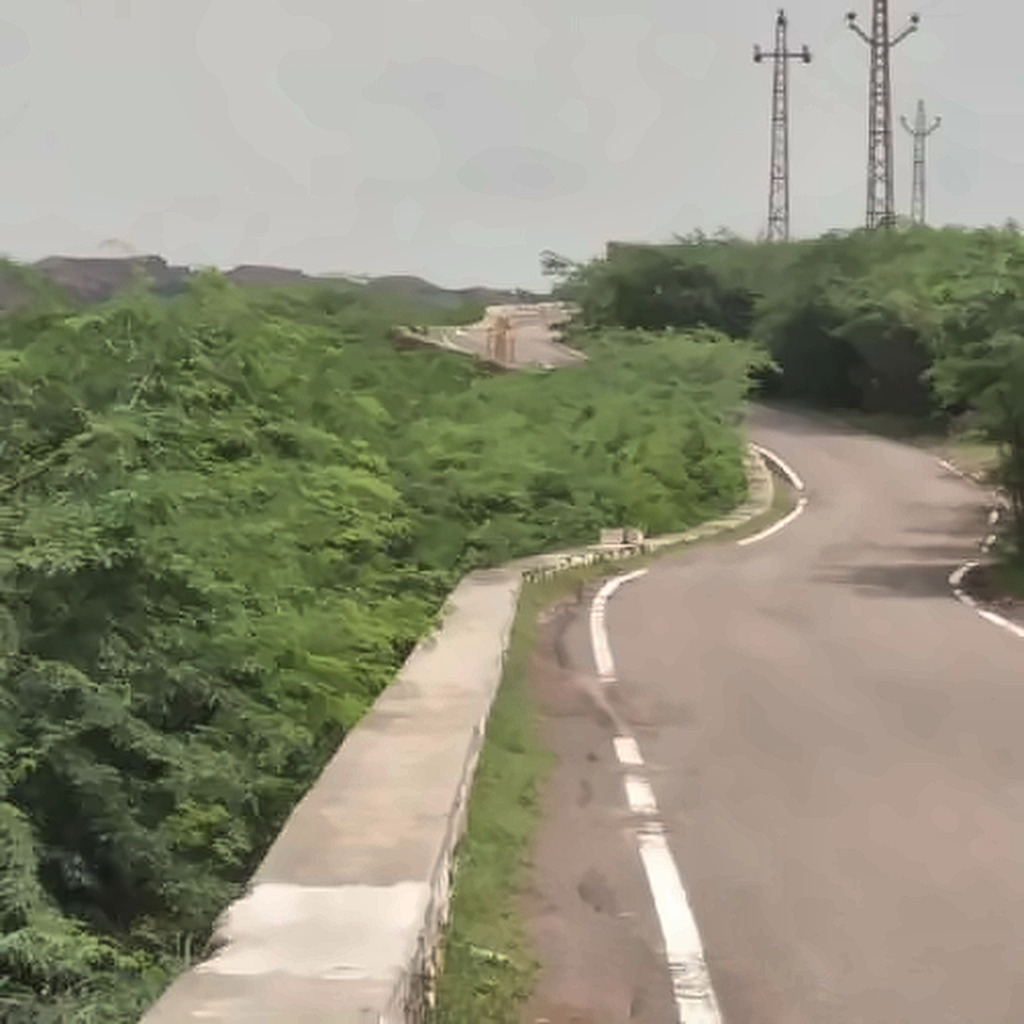
A young tigress leaves the forest where she was born and begins a journey to establish a territory of her own. Her route may take her beyond the boundaries of a protected area, across forests, agricultural land and other landscapes that connect one habitat to another. Today, however, highways, railway tracks, expanding settlements and other forms of development increasingly interrupt these natural movement routes.
The same challenge faces elephants, leopards, bears, dholes and many other species across India. Their survival depends not only on protected forests but also on the landscapes that connect them.
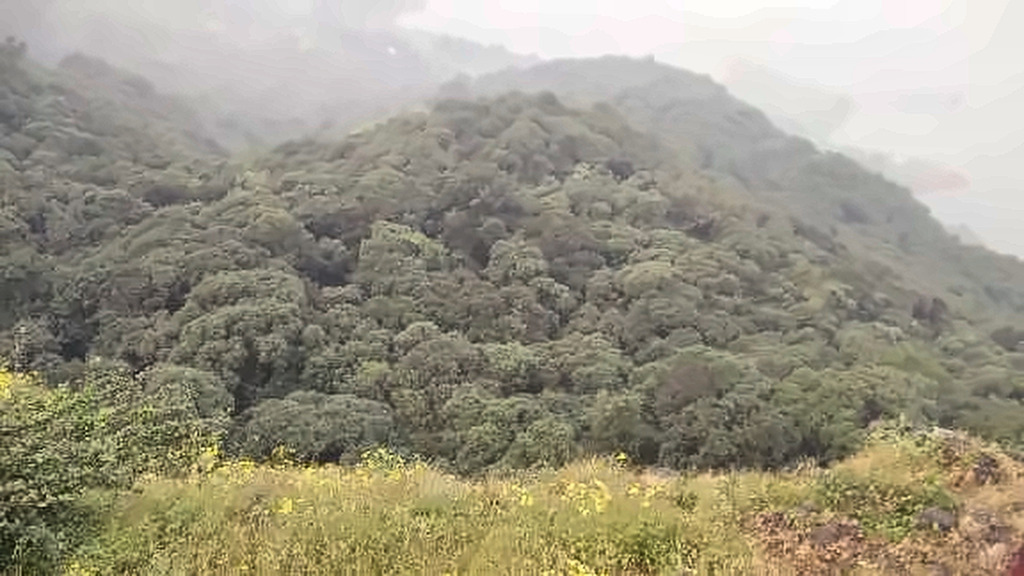
FORESTS CANNOT SURVIVE AS ISOLATED ISLANDS:
India has built an extensive network of national parks, wildlife sanctuaries and other protected areas. These remain the foundation of conservation. Yet wildlife does not recognise administrative boundaries. Animals move across landscapes in search of food, water, mates and suitable habitats. Seasonal movement, dispersal of young animals and genetic exchange all depend on connectivity between habitat patches.
Rapid expansion of roads, railway networks, urban settlements, mining, agriculture and other infrastructure has fragmented many of India’s landscapes. As forests become increasingly disconnected, wildlife movement becomes more difficult and dangerous. Road and railway mortality, human-wildlife conflict, isolation of animal populations and declining ecological resilience are among the consequences.
The challenge is therefore not simply protecting forests, but ensuring that the landscapes between them remain connected.
MORE THAN A PATH: WHY WILDLIFE CORRIDORS MATTER:
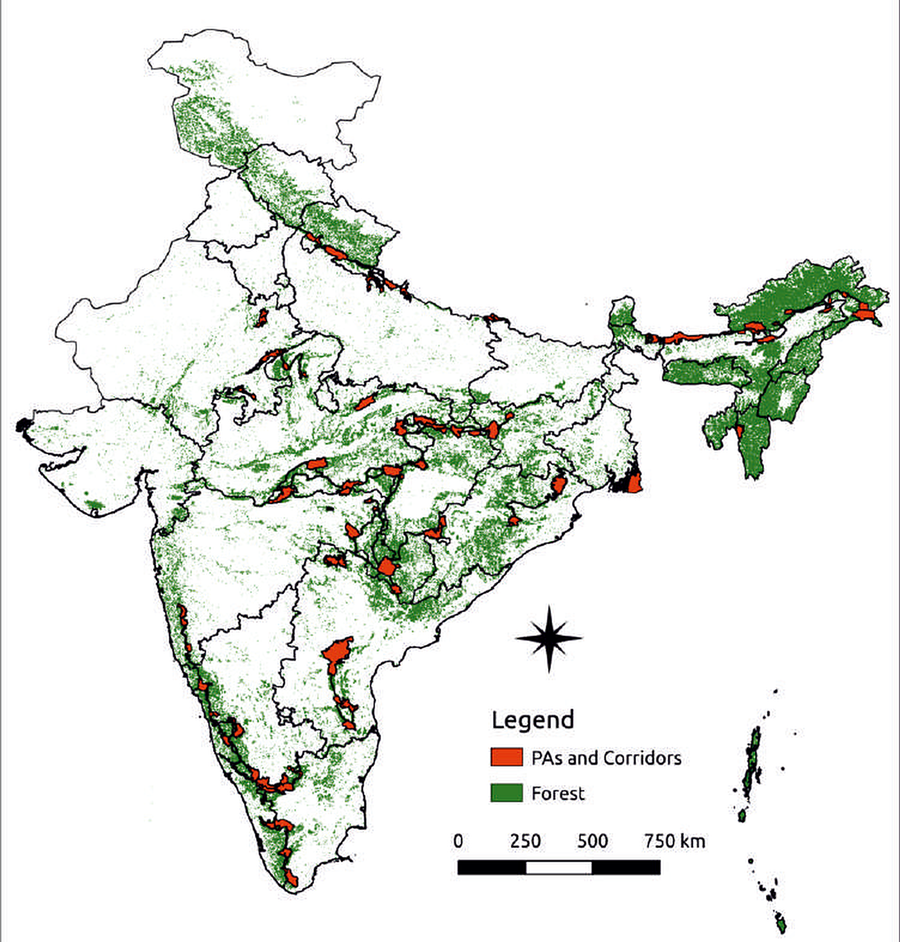
Wildlife corridors are stretches of natural or restored habitat that connect larger habitat patches and allow animals to move across landscapes. They enable species to disperse, maintain healthy populations and respond to changing environmental conditions.
But a corridor is more than a line drawn on a map. Its usefulness depends on habitat quality, width, continuity and the level of disturbance along the route. A narrow or degraded corridor intersected by roads, settlements or intensive human activity may provide little ecological value even if it remains visible on a map.
WHY CORRIDORS MATTER IN A CHANGING CLIMATE:
Climate change makes ecological connectivity even more important. As temperatures rise and rainfall patterns shift, many species may need to move towards new areas with suitable conditions.
Connected landscapes provide animals with opportunities to move naturally in response to environmental change. Fragmented landscapes can instead isolate populations and restrict their ability to adapt. Wildlife corridors can therefore serve not only as conservation pathways but also as important components of climate adaptation.
LEARNING FROM INDIA:
India has increasingly recognised the importance of ecological connectivity. The country has identified 150 ground-validated elephant corridors across 15 elephant-range states, while major tiger landscapes have also been mapped to understand connectivity between habitats.
Infrastructure projects have begun incorporating wildlife crossings. The Delhi–Mumbai Expressway, for example, includes specially designed wildlife overpasses and an underpass intended to facilitate animal movement across the highway. The Delhi–Dehradun Economic Corridor has also incorporated wildlife underpasses designed using ecological information.
The Kaziranga–Karbi Anglong landscape in Assam provides another important example. During the annual monsoon floods, rhinos, elephants, deer and other wildlife move towards higher elevations in the Karbi Anglong hills. Maintaining these movement pathways is therefore closely linked to the ability of wildlife to survive seasonal environmental changes.
These examples show that conservation and development need not always be opposing goals. The challenge lies in planning infrastructure in ways that allow both people and wildlife to move and thrive.
PEOPLE ARE PART OF THE LANDSCAPE:
Wildlife corridors are not empty spaces. Many pass through landscapes where people farm, graze livestock, collect forest resources or otherwise depend on the land.
Communities living within and around these landscapes often possess generations of knowledge about wildlife movement, seasonal changes and local ecosystems. Involving them in identifying, monitoring and managing corridors can strengthen conservation efforts while helping reduce human-wildlife conflict.
Successful corridor conservation therefore requires more than ecological mapping or engineering solutions. It requires cooperation among scientists, local communities, planners, engineers, conservation organisations and policymakers.
TECHNOLOGY IS HELPING US SEE THE INVISIBLE:
Modern conservation science provides powerful tools for understanding ecological connections. Satellite remote sensing and Geographic Information Systems (GIS) can map changes in forest cover, identify fragmented habitats and analyse landscape connectivity across large areas. GPS telemetry and camera traps provide evidence of how animals actually use these landscapes.
Cloud-based platforms such as Google Earth Engine allow scientists to analyse large volumes of satellite data efficiently. Spatial modelling and decision-support tools can help planners identify places where proposed roads, railways or other infrastructure may intersect with wildlife movement, allowing mitigation measures to be considered before construction begins.
Artificial intelligence and machine-learning approaches are also creating new possibilities for analysing ecological data and identifying areas that may be important for wildlife movement and habitat restoration.
Mapping a corridor, however, is only the first step. The greater challenge is ensuring that scientific information reaches planners and decision-makers before landscapes are permanently altered.
THE FUTURE LIES IN THE SPACES BETWEEN:
India’s development will continue to bring new highways, railways, renewable-energy projects and expanding urban centres. The challenge is not to stop development, but to ensure that it does not permanently sever the ecological connections on which wildlife depends.
Protected areas remain the foundation of conservation, but they cannot function as isolated islands. Better identification of corridors, integration of ecological connectivity into land-use planning, careful environmental assessment, ecological restoration where connectivity has been lost, and meaningful community participation can help keep these natural pathways open.
The forests may be where wildlife lives, but the connections between them may determine whether wildlife can continue to survive.
Protecting those connections may prove to be one of India’s most important conservation decisions of our generation.

About the Author
Dr. Sujata Upgupta is an environmental scientist specialising in landscape ecology,
biodiversity conservation, remote sensing and Geographic Information Systems (GIS).