-Kumud Dubey and K. P. Dubey
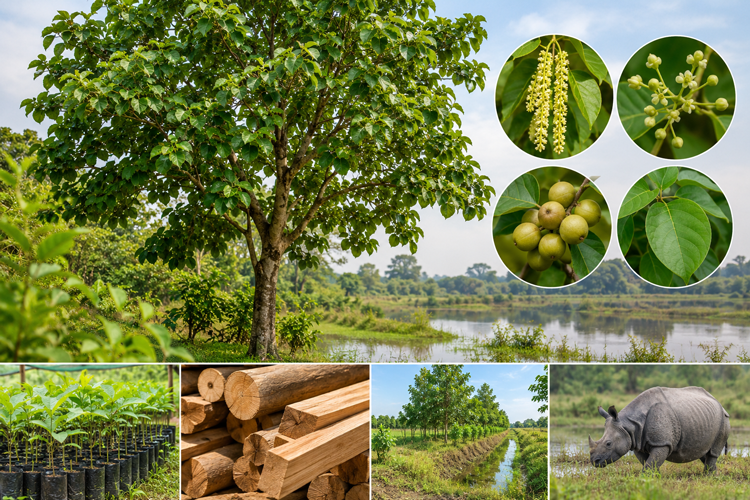
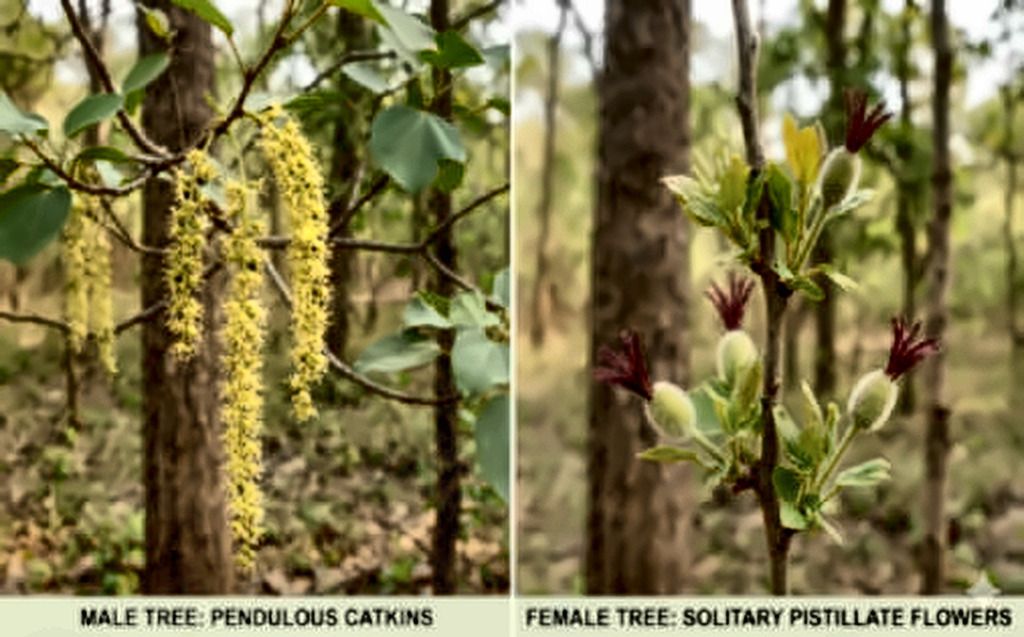
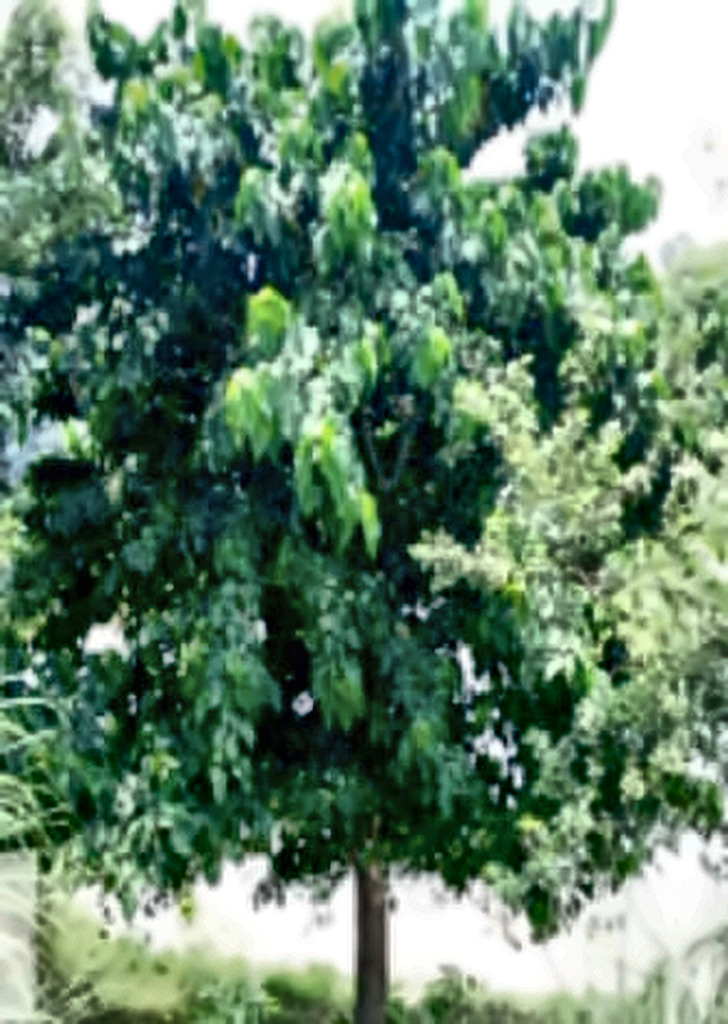
Trewia nudiflora Linn. (synonym Mallotus nudiflorus)is a woody plant of the Euphorbiaceae family. It is commonly known as False White Teak, Gutel, Khamara, tumri, or pitali. It is a multipurpose dioecious tree and native to South and Southeast Asia. It plays a highly versatile role across various sectors, delivering important traditional and scientific benefits. It is a fast-growing, light-demanding pioneer tree that thrives in waterlogged, riverine, and swampy environments, making it highly suitable for agroforestry, biodrainage, and wetland restoration. Its tree trunk is large deciduous, growing up to 10-20 m tall, with a smooth grey bark. It has a clear bole up to 20m under favourable conditions, often much buttressed at the base. The flowers of Trewia nudiflora (Mallotus nudiflorus) are strictly unisexual and naked (lacking petals), with male and female blossoms growing on completely separate trees (dioecious syntax). These are pale green in colour. Male flower Borne in long, loose, and drooping catkin-like racemes measuring 7 to 19 cm in length. While female flower do not grow in long chains; instead, they emerge singly or in clusters of 2–3 directly from the leaf axils on long, stiff stalks (pedicels) Fruit is globose, 2-4 cm wide and five chambered. Fruit ripens in Oct-Dec. Fruits are edible, seeds yield fatty oil. Propagation is easily possible from seeds. Its natural regeneration is quite frequent in the moist and coarse textured soil. It is found almost throughout the moist and hot parts of India from Yamuna eastwards and southwards, ascending to an altitude of 1200m. Prevalent occurrence is reported at river banks or water bodies. It is sensitive to drought. Decent soil wetness supports its growth and reproduction. An interesting observation from Dudhawa National Par4k is reported that this tree needs Rhino for its existence. This tree is a common component of Dudhawa’s Sal woodland. A mutualism has been seen that benefits both tree and rhino. These rhinos seem to be critical dispersal agents of viable seeds of Trewia nudiflora. A rhino’s faecal mass, where the rhino defecates into piles that provide nutrients to feed the seeds that have passed through the rhino’s digestive system and then sprout and form wood patch.
Nursery: It needs Tropical to subtropical climate with monsoonal zones. Preferred temperature to grow 22°C to 35°C, but may tolerate extreme highs up to 45°C, but frost Sensitive. It is highly productive in areas with 1,500 mm to 4,000 mm annually. Deep alluvial, loamy, or clayey soils are preferred. It effortlessly tolerates prolonged seasonal flooding and poorly drained, waterlogged substrates. Full sunlight is mandatory for good growth. Seedlings are shade-intolerant and will fail under a dense forest canopy. For raising nursery, Ripe, fleshy green-yellow fruits from the tree during should be collected during July to September. Depulping of the fruits by soaking them in water and rubbing away the fleshy pericarp should be done for extracting the seeds and then washed and air dried. Before sowing, these seeds should be soaked in ambient water for 24 hours before to break mild seed-coat dormancy. Sowing of seeds in raised sandy loam beds or polybags at a depth of 0.5 to 1 cm should be done and keep irrigated. Seedlings emerge within 14 to 30 days with a typical germination rate of 60–80%.
Usually after 3–4 months, these seedlings get 20 to 30 cm in height and can be transplanted in field, as per requirement. For biomass/timber production, a dense 3m × 3m or 4m × 4m spacing layout or 2.5m X 2.5m spacing for bund plantation may be used. Spacing may vary according to the space availability and end objective of plantation. Weeding is necessary during the first two years. Once established, the tree’s own canopy shadow and allelopathic leaf litter naturally suppress weed growth. Light side-pruning is must if straight, knot-free timber logs are desired for peeling or box-making.
Its Dioecious Nature is a limitation in plantation if the goal is seed harvesting or ecological wildlife restoration (e.g., attracting fauna with fruit). To overcome this drawback, a mixed-sex plantation ratio should be ensured. Seedlings are highly vulnerable to severe frost and will experience heavy dieback in cold climates. Regular monitoring is required for defoliator caterpillars, which occasionally attack the broad, fleshy leaves during the early monsoon season.
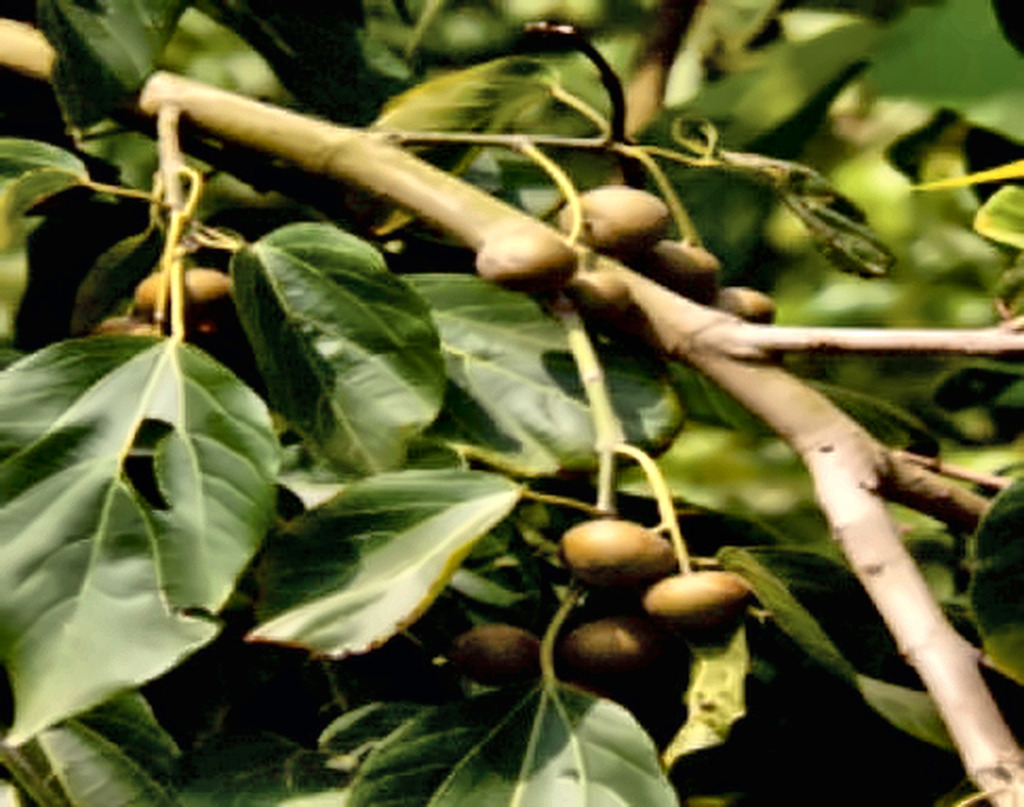
Uses: Trewia nudiflora has multifarious uses as medicine, timber, phytoremediation and for ecological security.
Medicinal Uses: In Ayurveda, Trewia nudiflora is classically classified as a potent Ugra-gandha (strong-scented) and Katu-tikta (pungent-bitter) medicinal tree. It is primarily utilized in traditional formulations to balance aggravated Vata and Kapha doshas, making it highly effective for treating chronic inflammatory conditions, swelling, and digestive issues. Its Roots (Mula), Leaves (Patra), and Stem Bark (Tvach) are used as ayurvedic medicine in form of fresh juice (Swarasa), warm decoctions (Kwatha), or thick root pastes (Kalka). Because of its potent, intense Ushna (hot) nature, it is traditionally administered with soothing carrier substances (Anupanas) like milk or clarified butter to balance the body’s fiery Pitta element. The tree contains complex bioactive chemical constituents like taraxerone, betasitosterol, nudiflorine, and trewiasine, which grant it a highly versatile role in pharmacology. Roots are used as a traditional poultice or decoction to ease gout, rheumatism, and acute stomach-aches. Leaves & bark are used to prepare an astringent decoction to treat flatulence, excessive bile, phlegm, and edema. The leaves are also crushed directly to accelerate wound healing, to clean infected ulcers and accelerate tissue repair. Modern scientific researches highlight its distinct antibacterial, antioxidant, and anti-ulcerogenic properties, with its unique cardenolides drawing research focus for cancer therapeutics. Its seed and leaves have Larvicidal properties against Mosquito Larvae Culex quinquefasciatus
Timber and Wood Products: Though it is related to teak by name, its wood falls into the soft and weak category, meaning it is valued primarily for lightweight and low-stress industrial items. The wood is even textured and classified as a soft timber. It is a straight-grained timber with medium fine- texture. Its wood is used for plywood manufacturing. It is also used for making drums, cheap planking and suitable for match splints, tea chests and packing cases. It is also used for agricultural implements, dug- outs, yokes, slate, and picture frames, carved images, and toys. Due to its soft baseline density, research from institutions like the ResearchGate Wood Science Network has explored thermal-compression methods to convert its raw fibres into high-strength compressed materials. This is not very popular timber species. The use of this untapped wood species can alleviate the pressure on over exploited wood species and enhance the economic viability of these waterlogged wastelands.
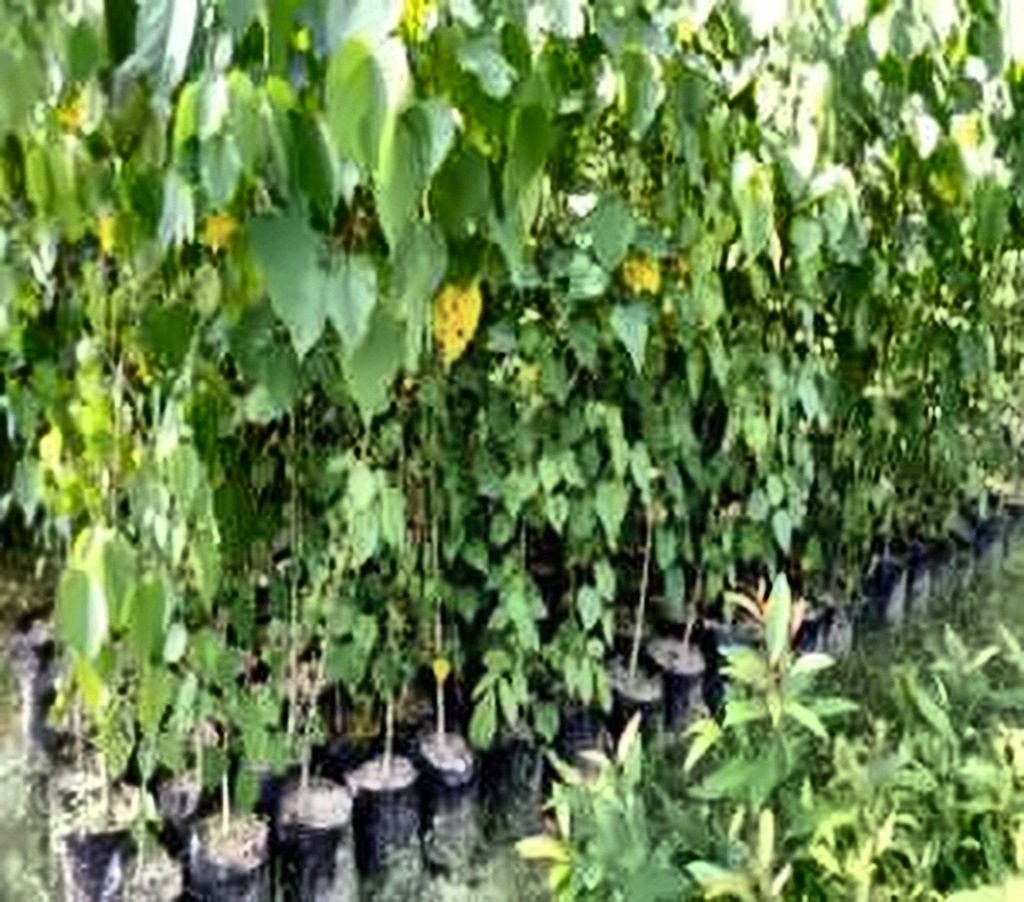
Phytoremediation and Weed Control: Trewia nudiflora thrives in wet, riparian conditions and is an exceptional candidate for biodrainage and site rehabilitation suffering from waterlogging and high water table. Its waterlogged mitigation role has been studied under major forestry projects managed by the Indian Council of Forestry Research and Education (ICFRE). The plantation trials along minor canals proved that its high transpiration and water tolerance effectively drain high water table zones. Due to its allelopathy effect, It is effective in weed control. The tree functions as a natural, eco-friendly herbicide. Its decomposing leaves release specialized allelopathic compounds like loliolide and 6,7,8-trimethoxycoumarin into the soil, significantly stifling the root and shoot growth of invasive weeds like barnyard grass.
Ecological Value: Ecologically, this fast-growing pioneer species forms a critical cornerstone for local wildlife networks in moist, deciduous, and riverine forests. The fleshy, globose drupes are a primary, beloved dietary staple for the endangered greater one-horned Asian rhinoceros (Rhinoceros unicornis). The rhinos act as the primary seed dispersal agents, dropping the pits in nutrient-dense “faeces” piles across plains to ensure forest regeneration. It acts as riparian buffer zones. Because it handles long periods of submersion effortlessly during monsoons, it behaves as an exceptional anchor along riverbanks, minimising stream-side soil erosion. It’s massive, ovate leaves also double as high-utility livestock fodder / forages in rural regions.
Trewia Agroforestry: In agroforestry, Trewia nudiflora may serve as an exceptional multipurpose block-plantation and bund tree, primarily used for biodrainage, boundary demarcation, and short-rotation industrial timber in low-lying, flood-prone, or riparian agricultural zones. Because of its specific growth habits, Trewia nudiflora is integrated into farms using two primary configurations:
Boundary & Bund Planting (Linear Buffer):
- Application: Planted in single or double rows along irrigation canals, riversides, and farm boundaries.
- Primary Function: Functions as a biodrainage barrier. Its high transpiration rate pumps excess subterranean water out of the soil, preventing the root-rot of adjacent, sensitive food crops during heavy monsoons.
- Spacing: 2.5 m × 2.5 m or many more spacing along boundaries to form a dense canopy wall that acts as a structural windbreak.
Agrisilvicultural Systems (Block Plantations):
- Application: Dedicated blocks on marginal, poorly drained, or seasonally waterlogged patches of a farm where traditional crops fail.
- Intercropping Phase: During the first 1 to 2 years, the wide spacing allows farmers to grow shade-tolerant or short-duration companion crops (e.g., turmeric, ginger, or wet-cultivar fodder grasses) between the tree rows.
- Spacing: A wider 4 m × 4 m or 5 m × 5 m or many more grid layout to maximize sunlight penetration for understory crops.
Though due to its allopathic effect, it can inhibit the germination of delicate cereal crops like wheat or upland rice if planted too close. In monsoon / summer (Kharif Phase), when the tree canopy is dense and fully flushed with leaves, cultivate the high-shade specialists like Turmeric, Ginger etc. It can be planted along canal side where land is suffering from high water table and waterlogging or in block plantation. During winter / spring (Rabi Phase), while the tree is completely leafless, the field receives 100% direct sunlight. Farmers can take advantage of this winter window to grow quick short-duration vegetables, pulses, or winter cover crops like lentils and mustard. It can be planted along canal side where land is suffering from high water table and waterlogging or in block plantation. Para Grass (Brachiaria mutica) may be planted under Silvipastural model. The Grass is the ultimate choice for waterlogged fields. It grows aggressively under partial shade and absorbs immense amounts of surface water. Orchardgrass (Dactylis glomerata) can also be grown under this tree. This grass has proven in agroforestry screenings to maintain its nutritional dry weight under heavy tree canopies
It gives fast industrial returns. It features a rapid early growth rate. For farmers looking for quick cash-crop timber, the trees reach an industrially harvestable diameter for matchwood, paper pulp, and packing-crate peeling within a short 8 to 12-year rotation cycle.It may be developed as Livestock Fodder Bank. The broad, nutrient-dense leaves can be lopped during lean periods to serve as a supplementary, low-cost forage source for cattle and goats. It control soil erosion. On riverside farms, its extensive, water-loving root matrix stabilizes the banks, preventing valuable agricultural topsoil from washing away during seasonal flooding. This species is of medicinal value also which may add to its economic viability.


Author Is : Senior Scientist ICFRE- Eco-Rehabilitation Centre, Prayagraj
Retd. Principal Chief Conservator of Forest (U.P.) & Joint Advisor (UP), NHAI, Lucknow