
SATIKA SVETAPATANGA शटिका श्वेतपतङ्गा
Acharya Balkrishna1,2, Swami Narsingh Dev2, Bhaskar Joshi2, Rajesh Mishra2.3, Amit Kumar2, Anupam Srivastava2
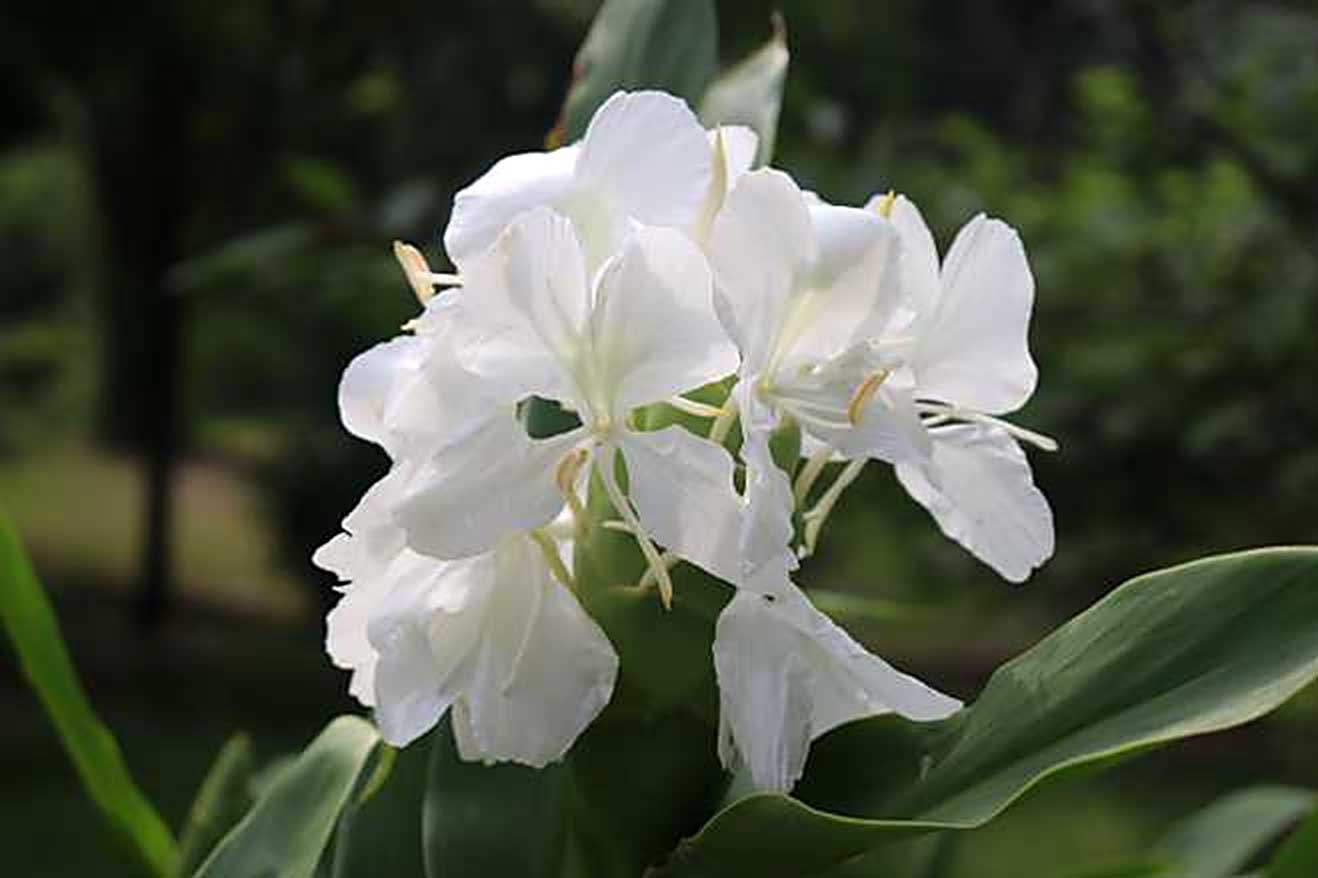
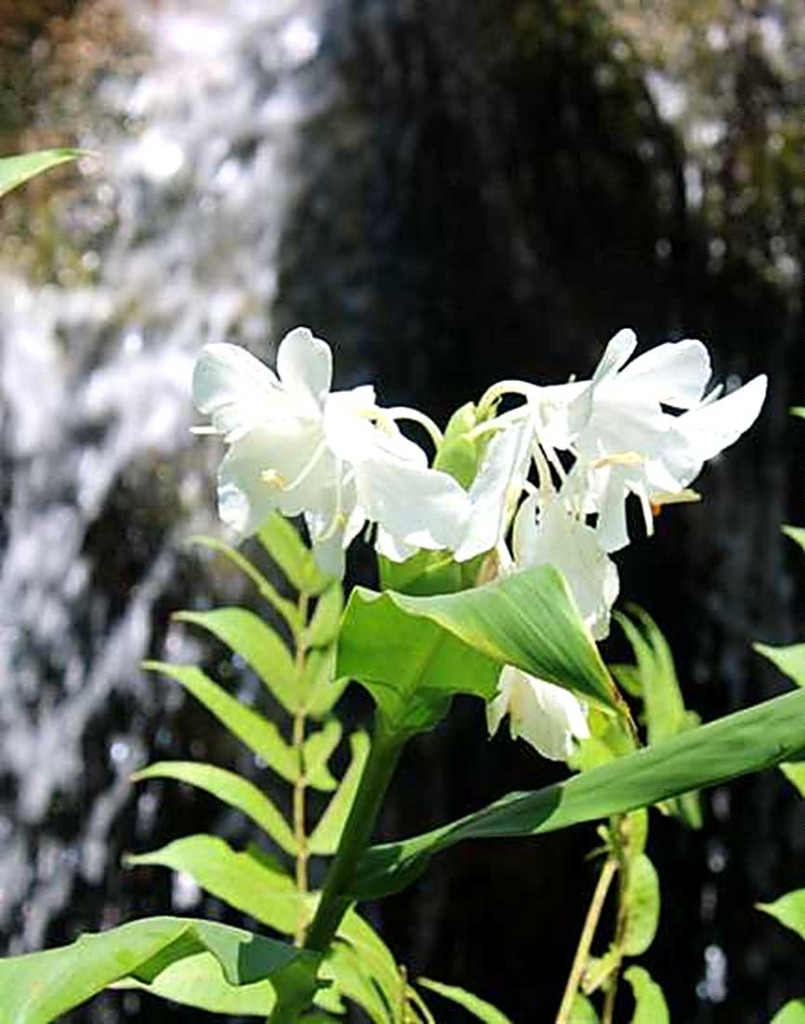
A flower known as Gulbakavali, is a popular name of the plant Hedychium coronarium in central India, found in tropical and subtropical region, especially in the forests of Pachmarhi and Amarkantak in Madhya Pradesh. It is a perennial medicinal plant belonging to the ginger family (Zingiberaceae). It is renowned not only for its beautiful and distinctive fragrant flowers but also holds a significant place in traditional Indian systems of medicine such as Ayurveda and in folk medicine. It is used in India for a broader set of folk-medicinal and food uses, while in Madhya Pradesh (MP) the recorded use is much narrower and mostly centered on local tribal ethnomedicine and conservation-related reports. An extract derived from it using water (Arka) is highly beneficial for the eyes’ health, and used to treat conditions such as cataracts, blurred distance vision, burning sensations, and haziness in the eyes. The plant is easily recognized by its lush green foliage and fragrant white flowers, which are often used in cultural rituals, perfumes, and traditional healing practices. The natural occurrence of this herb in any other part of Madhya Pradesh is not reported. The herb is limited to very moist areas only and found in abundance specifically in Mai Ki Bagia of Amarkantak town. Local people of the Amarkantak and Pachpedhi region, prepare the Ark (distilled extract) and earn additional revenue because of its therapeutic and industrial value (Mishra, 2013). Traditional healers also used its white fragrant flowers to prepare eye tonic. The rhizomes yield a good essential oil that is used in perfumery and Ayurvedic/pharma formulations.
A recent ethnobotanical study published in a renowned journal as Plant Biosystems (Taylor & Francis UK, 2024), reported that it is one of the significant traditional medicinal plants used by rural communities in north-eastern Madhya Pradesh, India. The plant demonstrated high ‘Relative Frequency of Citation’ (RFC) and ‘Use Value’ (UV) scores, reflecting its widespread traditional use and cultural significance. It is predominantly employed for the treatment of eye disorders and high blood pressure (hypertension), highlighting its medicinal properties (Sharma et al., 2024).
Furthermore, due to excessive exploitation of its rhizomes for medicinal purposes and the loss of its natural habitat are considered the primary threats to this plant. Its distribution is limited to specific areas, including the Anuppur and Amarkantak regions in the Indian state of Madhya Pradesh. The primary reasons for the decline in plant population in this region include habitat destruction, uprooting of the entire plant, premature harvesting, and the growing market demand for extracts derived from its flowers.
BOTANICAL DESCRIPTION
This plant is a herb that spreads via underground rhizomes and thrives in organic, tropical regions. Its leaves are long, lance-shaped, and smooth, while the flowers are white with white or yellow centres.
VERNACULAR NAMES
H. coronarium J. Koenig is known by a variety of vernacular names across different regions of India and other countries. It is commonly known as Dolan Champa in Hindi, Gul-e-bakawali in Urdu, Loklei or Khumpui in Manipuri, Sonatakka in Marathi, Suruli Sugandhi in Kannada, Chankitam or Chantikantam in Tamil, Kichchiligadda or Vasa Vasanthi in Telugu, and Dudh Kewara in Nepali. Moreover, in English it is commonly known as Butterfly Lily, Ginger Lily, Garland flower, White ginger, while Flor de Mariposa in Spanish and Lirio-do-brejo or Gengibre-branco in Portuguese, highlighting its recognition as an ornamental and medicinal plant in several tropical and subtropical regions (Balkrishna, 2023).
IN AYURVEDA AND CLASSICAL TEXT(S)
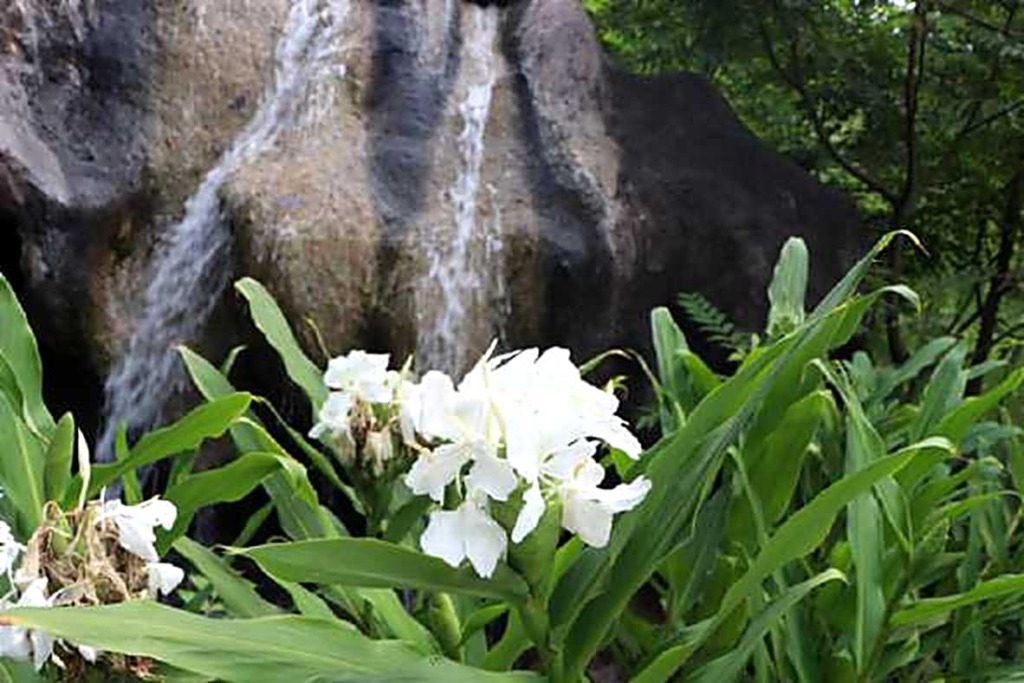
In Ayurvedic and other classical texts, the rhizomes and roots are described as vata-pacifying, and are valued for their antipyretic (fever-reducing), digestive-stimulant, and tonic properties. The essential oils obtained from the rhizomes and roots are also believed to possess therapeutic benefits to treat pain, inflammation, arthritis, fever, indigestion, weakness, respiratory disorders, and gastric issues. Ayurveda describes the Gulbakawali (H. coronarium flowers) as a remedy for Linganasha (cataract). Its distilled floral extract, Gulbakawali Arka, is traditionally used as an ophthalmic preparation as an eye tonic to prevent and manage cataract and other eye ailments (Balkrishna, 2023).
Additionally, there is a famous Indian folktale associated with ‘Gulbakavali’. It is a mythical, exquisitely beautiful, and fragrant white flower. It is said that on the night of the full moon, this flower blooms fully and unfurls its petals in a golden lake located in the realm of the gods. The flower possesses a miraculous quality: if placed upon the eyes of a blind person, it restores their sight. The story of ‘Gulbakavali’ revolves around Prince Vijay, the son of King Prachand; after overcoming numerous hardships, he brought this flower from the realm of the gods to the human world and placed it on his blind father’s eyes, thereby restoring his vision. Regardless of the actual truth, it is possible that this story was crafted based on the flower’s name and its beneficial properties [Brahmakumaris (n.d.)].
GULBAKAWALI ARKA: METHOD OF PREPARATION ACCORDING TO AYURVEDA
Kalpana – Arka Kalpana
Method – The fresh Gulabakawali flowers (1 kg) are shade dried and soaked overnight in 10 litre water, then in the next step it’s subjected to hydrodistillation in a traditional earthen distillation apparatus (Arka Yantra). The volatile and water-soluble constituents are condensed and collected as a clear distillate, known as Gulbakawali Arka (Joshi & Kumar, 2023; Singh and Singh, 2012).
Medicinal Uses around the globe
Hedychium coronarium is widely used in traditional medicine across South and Southeast Asia for the management of a broad spectrum of human diseases. Ethnomedicinal documents indicate that different plant parts of this plant, particularly the rhizomes, roots, stems, leaves, and flowers, are employed for treating disorders affecting multiple body systems. The rhizome is the most frequently utilized part and is used for managing diabetes, gastrointestinal disorders (diarrhoea, dysentery, dyspepsia, intestinal worms, abdominal pain), fever, bronchitis, cough, chest pain, skin diseases, edema, bruises, fractures, sprains, rheumatism, and body pain. Root preparations are traditionally administered for headache and common cold, whereas stem juice is applied to reduce swelling. Flowers and roots are also used for treating nasal infections, conjunctivitis, and other eye disorders. Leaf decoctions serve as gargles for tonsillitis, while the whole plant is reported for use in liver disorders, malaria, halitosis, tumors, snakebite, and wound healing. Additionally, fresh rhizomes are used to alleviate dizziness, and combinations of rhizomes with other medicinal plants are administered for pediatric colic and stomach complaints (Balkrishna, 2023; Pachurekar and Dixit, 2017).
Chemical Constituents
H. coronarium contains important secondary metabolites such as alcohols, aldehydes, esters, ketones, phenolics, flavonoids, oxides, saponins, glycosides, labdane diterpenes, and sesquiterpenes. Compounds such as coronarin A–I, isocoronarin D, pacovatin A, (+)-nerolidol, hedychiol A, hedychiol B, stigmasterol, β-sitosterol, chrysin, and other significant compounds have been isolated from the plant. The volatile oil obtained from the rhizomes revealed the presence of linalool, α-pinene, β-pinene, γ-terpinene, camphene, 1,8-cineole, myrcene and 10-epi-γ-eudesmol. Its Coronarin D content is considered a potent anticancer agent (Arya et al., 2022; Balkrishna, 2023; Gafar and Salim, 2025).
Pharmacological Profile
H. coronarium exhibits a broad spectrum of pharmacological activities supported by various experimental in vitro and in vivo studies. The rhizome extracts and isolated bioactive compounds, especially labdane diterpenoids and essential oils, have demonstrated significant analgesic, anti-inflammatory, antioxidant, antimicrobial, antidiabetic, antihypertensive, hepatoprotective, diuretic, and anti-urolithiatic properties. The plant also shows promising antimalarial, leishmanicidal, trypanocidal, larvicidal, and anti-venom activities. Several studies have reported notable anticancer and chemopreventive effects against various cancer cell lines through induction of apoptosis, inhibition of cell proliferation, and cell cycle arrest. Additionally, the plant exhibits CNS depressant and neuropharmacological effects, supporting its traditional use in managing pain and inflammatory disorders (Balkrishna, 2023; Arya et al., 2022; Chan and Wong, 2015).
Overall, the available preclinical evidence suggests that H. coronarium is a valuable source of bioactive phytochemicals with diverse therapeutic potential. However, most findings are based on in vitro and animal studies, and further well-designed clinical trials are required to establish its efficacy and safety in humans. Further research into this plant could prove valuable for future pharmaceutical formulation and the development of plant-based products.
References
1. Balkrishna, A. (2023). World Herbal Encyclopedia (Vol. 52). Divya Prakashan.
2. Sharma, A., Adhikari, D., & Wagh, V. V. (2024). An ethnobotanical investigation of medicinal plants used among rural communities in Northeastern Madhya Pradesh, India: a quantitative study. Plant Biosystems – An International Journal Dealing with all Aspects of Plant Biology, 158(5), 1160–1181.
3. Arya, S., Kumar, R., Prakash, O., Rawat, A., Mahawer, S. K., Rawat, D. S., & de Oliveira, M. (2022). Hedychium coronarium J. Koenig: Traditional uses, phytochemistry, biological activities and future aspects. Current Organic Chemistry, 26(18), 1676–1690.
4. Chan, E. W. C., & Wong, S. K. (2015). Phytochemistry and pharmacology of ornamental gingers, Hedychium coronarium and Alpinia purpurata: a review. Journal of Integrative Medicine, 13(6), 368–379.
5. Pachurekar, P., & Dixit, A. K. (2017). A review on pharmacognostical phytochemical and ethnomedicinal properties of Hedychium coronarium J. Koenig an endangered medicine. International Journal of Chinese Medicine, 1(2), 49–61.
6. Gafar, M. K., & Salim, F. (2025). Phytochemicals with pharmacological potentials from Hedychium coronarium plant: a concise review. Discover Chemistry, 2(1), 289.
7. Brahma Kumaris. (n.d.). Gulbakavali. Murli Shabdavali. Retrieved July 7, 2026, from BKOne – Brahma Kumaris; retrieved from https://www.brahmakumaris.com/murlishabdavali/stories/g-h/gulbakavali
8. Singh, N., and G. Singh, (2012). Hedychium coronarium: An Overview. International Research Journal of Humanities, Engineering and Pharmaceutical Sciences, Vol. 1(02),
1–5.
9. Joshi, N., Shukla, G. S., & Kumar, P. (2023). Pharmaceutical preparation and stability study of Netramritam a herbal eye drop for Cataract. Journal of Ayurveda and Integrated Medical Sciences, 8(5), 26–29.
10. Mishra, M. (2013). Current status of endangered medicinal plant Hedychium coronarium and causes of population decline in the natural forests of Anuppur and Dindori districts of Madhya Pradesh, India.






1. Department of Allied Sciences, University of Patanjali, Patanjali Yogpeeth, Haridwar, Uttarakhand 249 405, India
2. Patanjali Herbal Research Division, Patanjali Research Foundation, Haridwar, Uttarakhand 249 405, India
3. Patanjali Bhartiya Ayurvigyan Evam Anusandhan Sansthan, Haridwar, Uttarakhand 249 405, India