
Ashish Kumar Yadav* and Kumud Dubey
INTRODUCTION:
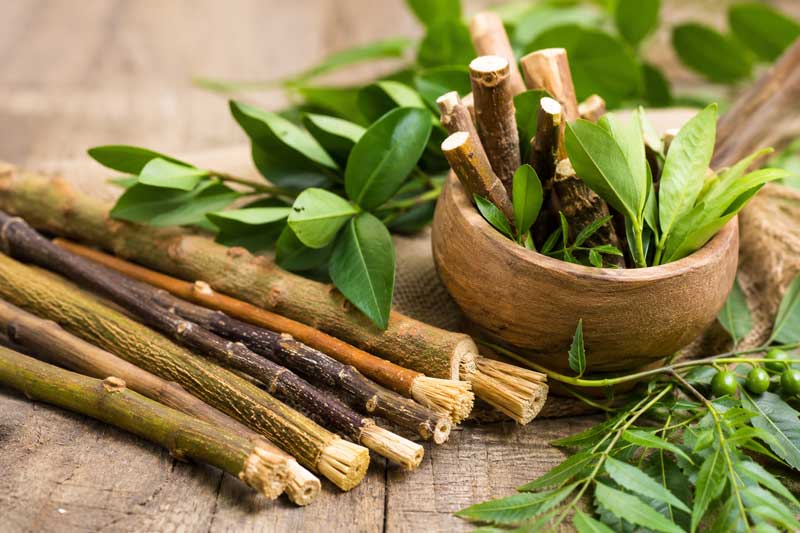
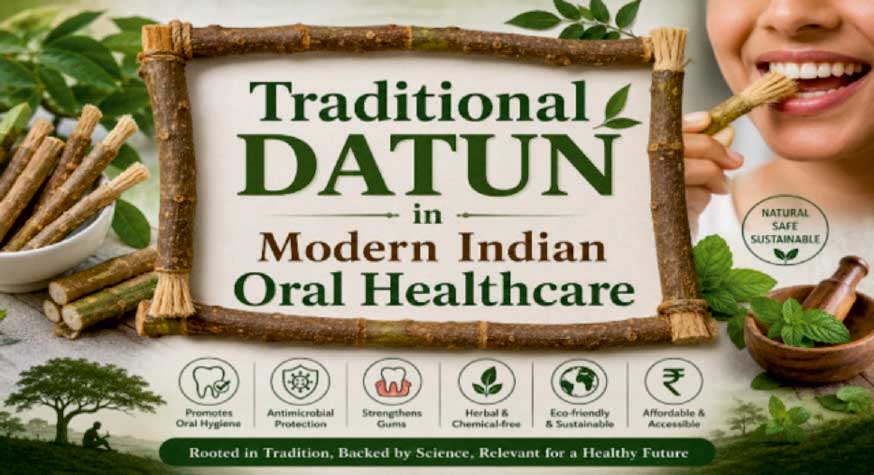
Oral health is an essential component of general health and well-being, influencing nutrition, communication, and overall quality of life. According to the World Health Organization (WHO), oral diseases such as dental caries, periodontal diseases, and tooth loss affect billions of people worldwide and remain major public health concerns, particularly in low- and middle-income countries. Although modern toothbrushes and fluoridated toothpaste are widely used, traditional plant-based oral hygiene practices continue to play a significant role in many parts of the world, especially in Asia, Africa, and the Middle East. In India, one of the oldest and most widely practiced traditional methods of oral hygiene is the use of Datun (also known as Daatun), which involves chewing the fresh twigs or stems of medicinal plants (mostly from forest tree species) to clean the teeth and gums. This practice has been an integral part of Indian culture for several millennia and is deeply rooted in traditional healthcare systems such as Ayurveda. Ancient Ayurvedic texts, including the Charaka Samhita and the Sushruta Samhita, recommend the use of medicinal chewing sticks for maintaining oral cleanliness, strengthening teeth and gums, preventing halitosis, and reducing the incidence of oral diseases. The selection of plant species was traditionally based on their taste (Rasa), medicinal properties, and therapeutic effects on oral tissues. Unlike conventional toothbrushes, Datun combines mechanical plaque removal with the release of bioactive phytochemicals during chewing. Fresh twigs contain diverse secondary metabolites, including alkaloids, flavonoids, tannins, saponins, terpenoids, polyphenols, essential oils, and glycosides, many of which exhibit antimicrobial, anti-inflammatory, antioxidant, analgesic, and astringent properties. These phytochemicals help inhibit the growth of cariogenic and periodontopathic microorganisms such as Streptococcus mutans, Porphyromonas gingivalis, and Candida albicans, while simultaneously promoting gingival health and reducing plaque formation. Furthermore, the fibrous nature of chewing sticks facilitates mechanical cleaning of tooth surfaces and gentle massage of the gingiva, thereby improving blood circulation and maintaining periodontal health.
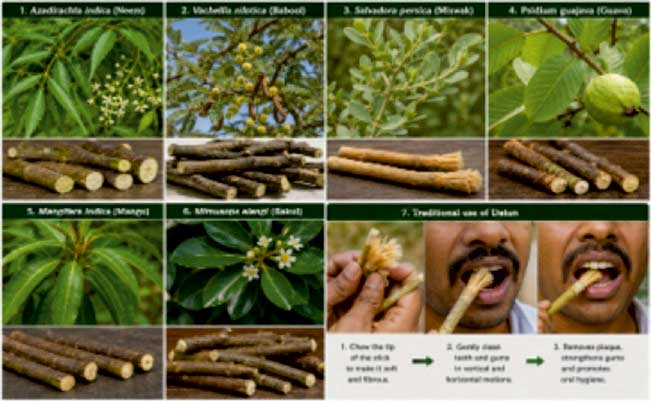
India possesses remarkable ethnobotanical diversity, with numerous medicinal plant species traditionally used as Datun by rural, tribal, and forest-dependent communities. Commonly used species include Azadirachta indica (Neem), Vachellia nilotica (Babool), Salvadora persica (Miswak/Pilu), Mangifera indica (Mango), Psidium guajava (Guava), Syzygium cumini (Jamun), Mimusops elengi (Bakul), Ficus religiosa (Peepal), and several other indigenous taxa. The choice of species varies according to geographical distribution, cultural traditions, seasonal availability, and local ethnomedicinal knowledge, reflecting the close relationship between biodiversity and traditional healthcare practices. During the past few decades, rapid urbanization, changing lifestyles, and the widespread availability of commercial oral-care products have contributed to a gradual decline in the use of Datun, particularly among younger generations. Nevertheless, growing concerns regarding antimicrobial resistance, adverse effects of certain synthetic oral-care formulations, plastic waste generated by disposable toothbrushes, and increasing consumer preference for herbal and eco-friendly products have renewed scientific interest in traditional chewing sticks. Numerous phytochemical, microbiological, pharmacological, and clinical investigations have demonstrated that several Datun species possess significant antibacterial, anti-plaque, anti-caries, anti-inflammatory, antioxidant, and wound-healing activities, supporting many of their traditional applications in oral healthcare. Beyond its medicinal value, Datun also represents an important component of India’s intangible cultural heritage and traditional ecological knowledge. The sustainable harvesting and utilization of medicinal twigs encourage biodiversity conservation, reduce dependence on plastic-based oral hygiene products, and contribute to environmentally sustainable healthcare practices. The continued documentation and scientific validation of indigenous knowledge associated with Datun are therefore essential for preserving cultural heritage while promoting evidence-based integration of traditional practices into contemporary preventive dentistry. The present review aims to provide a comprehensive overview of the ethnobotanical diversity of plant species used as Datun in India, summarize the traditional knowledge associated with their use, critically evaluate the available scientific evidence regarding their phytochemistry and pharmacological properties, and discuss their contemporary relevance, sustainability, and future prospects in modern oral healthcare. By integrating ethnobotanical information with current biomedical research, this review highlights the potential of Datun as an effective, affordable, culturally acceptable, and environmentally sustainable approach to oral health promotion.
HISTORICAL EVOLUTION OF DATUN IN INDIA:
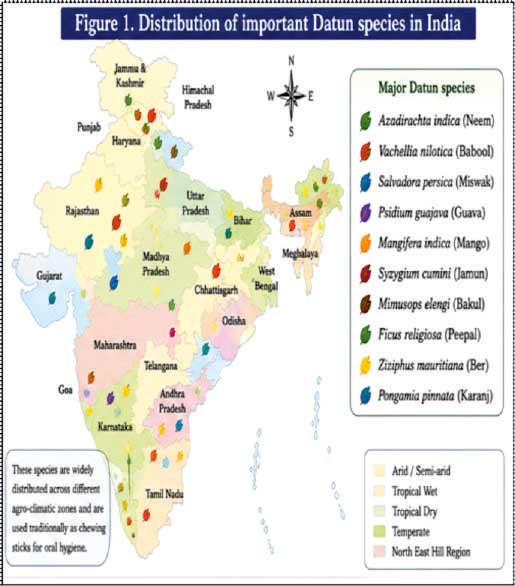
The use of Datun (chewing sticks) for oral hygiene in India dates back more than 3,000 years and constitutes one of the earliest documented forms of preventive dental care. Ancient Ayurvedic texts, including the Charaka Samhita (ca. 1000–600 BCE) and the Sushruta Samhita (ca. 600 BCE), recommend the daily use of fresh medicinal twigs (Dantadhavana) for cleaning teeth, strengthening gums, eliminating bad breath, and maintaining overall oral health. These texts describe the selection of chewing sticks based on their medicinal properties, taste (Rasa), and therapeutic effects, emphasizing the use of plant species with astringent, bitter, or pungent characteristics. Historically, Datun became an integral component of the daily routine (Dinacharya) in Ayurveda and was widely practiced across rural, tribal, and forest-dependent communities throughout India. Different regions adopted locally available medicinal plants such as Azadirachta indica (Neem), Vachellia nilotica (Babool), Salvadora persica (Miswak), and Mangifera indica (Mango), reflecting the country’s rich ethnobotanical diversity and traditional ecological knowledge. Although the introduction of commercial toothbrushes and toothpaste during the twentieth century reduced the prevalence of Datun in urban populations, the practice continues to be widely used in many rural areas due to its affordability, accessibility, and medicinal value. In recent years, growing interest in herbal healthcare, sustainable lifestyles, and evidence-based traditional medicine has renewed scientific attention toward Datun as a natural, eco-friendly, and culturally significant approach to oral hygiene.
ETHNOBOTANICAL DIVERSITY OF DATUN SPECIES:
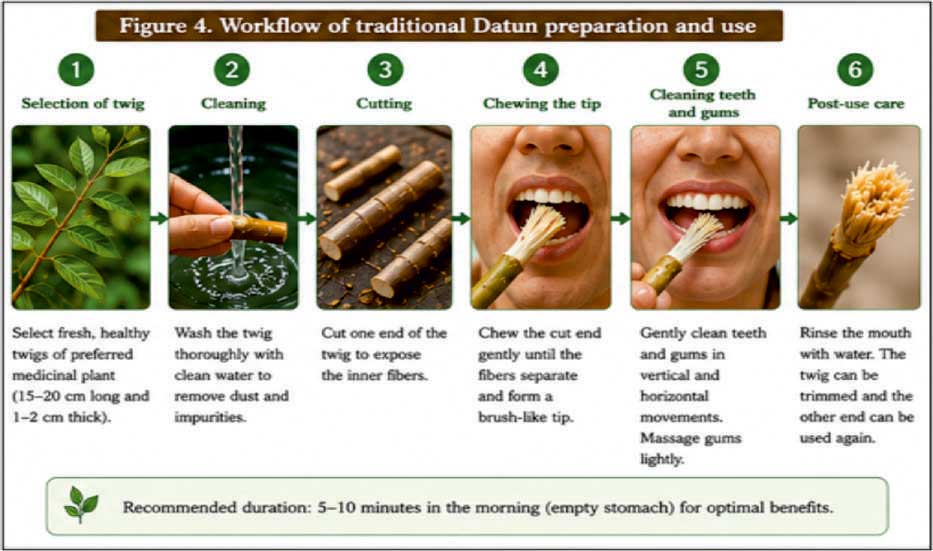
India is recognized as one of the world’s megadiverse countries, harboring an extensive wealth of medicinal plant species that have been traditionally utilized for healthcare. Among these, numerous plant species are employed as Datun (chewing sticks) for maintaining oral hygiene. The selection of Datun species varies across different geographical regions, climatic conditions, ethnic communities, and cultural traditions, reflecting the country’s rich ethnobotanical heritage and indigenous knowledge systems. More than 50–80 plant species belonging to diverse families, including Meliaceae, Fabaceae, Salvadoraceae, Myrtaceae, Moraceae, Sapotaceae, Rutaceae, and Rhamnaceae, have been documented as Datun in different parts of India. The most commonly used species include Azadirachta indica (Neem), Vachellia nilotica (Babool), Salvadora persica (Miswak/Pilu), Psidium guajava (Guava), Mangifera indica (Mango), Syzygium cumini (Jamun), Mimusops elengi (Bakul), Ficus religiosa (Peepal), Ficus benghalensis (Banyan), Ziziphus mauritiana (Ber), and Pongamia pinnata (Karanj), etc. These species are selected not only because of their availability but also due to their medicinal properties, including antimicrobial, anti-inflammatory, antioxidant, analgesic, and astringent activities. Ethnobotanical surveys have shown that rural and tribal communities possess extensive traditional knowledge regarding the identification, harvesting, and use of Datun species. Fresh twigs approximately 15–20 cm long and 1–2 cm in diameter are generally preferred. The terminal end of the twig is chewed until it forms a brush-like structure, which is then used to clean the teeth, gums, and tongue. Besides oral cleansing, several Datun species are believed to strengthen gums, reduce toothache, prevent bad breath, control dental plaque, and alleviate oral infections.
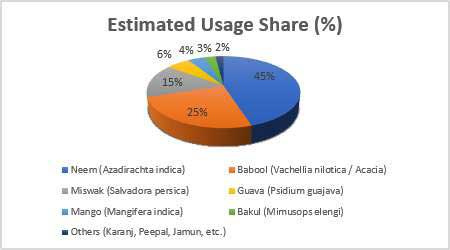
Graph 1: Percentage Distribution of Commonly Used Datun Species
The diversity of Datun species demonstrates the close relationship between local biodiversity and traditional healthcare practices. However, rapid urbanization, changing lifestyles, and declining transmission of indigenous knowledge have contributed to a gradual reduction in the use of traditional chewing sticks, particularly among younger generations. Therefore, systematic documentation, conservation of medicinal plant resources, and scientific validation of ethnobotanical knowledge are essential for preserving this valuable cultural heritage and promoting sustainable, plant-based oral healthcare.
MECHANISM OF ACTION IN ORAL HEALTHCARE:
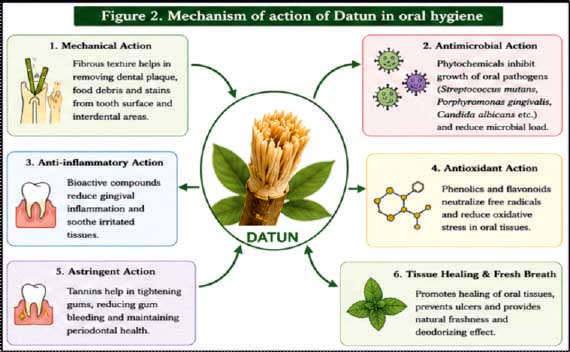
Datun promotes oral health through a combination of mechanical cleaning and phytochemical activity. The fibrous ends of chewed twigs effectively remove dental plaque, food debris, and surface stains while gently massaging the gingiva, thereby improving blood circulation and periodontal health. Simultaneously, bioactive compounds such as flavonoids, tannins, alkaloids, and terpenoids are released into the oral cavity, where they inhibit the growth of cariogenic and periodontal pathogens, reduce inflammation, neutralize free radicals, and support tissue healing. Together, these actions contribute to the prevention of dental caries, gingivitis, periodontal diseases, and halitosis.
PHYTOCHEMISTRY AND BIOACTIVE CONSTITUENTS:
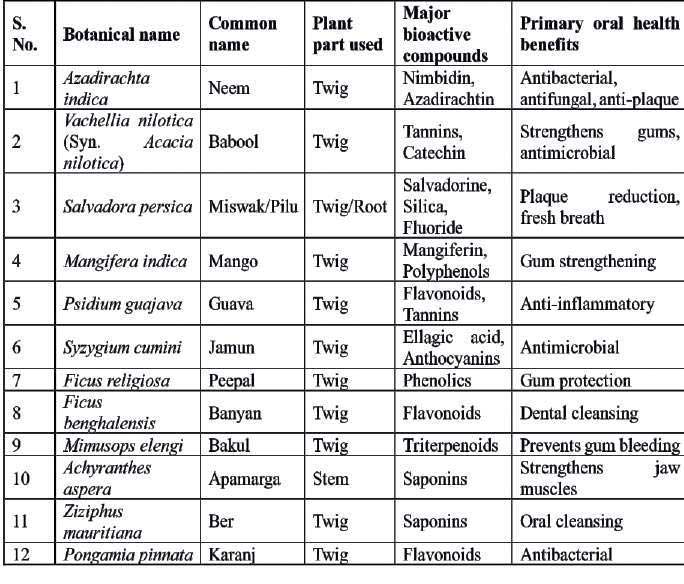
The therapeutic efficacy of Datun is primarily attributed to the diverse phytochemicals present in the medicinal twigs of various plant species. These chewing sticks are rich in bioactive constituents such as alkaloids, flavonoids, tannins, saponins, terpenoids, phenolic compounds, glycosides, essential oils, and steroids, which collectively contribute to their antimicrobial, anti-inflammatory, antioxidant, analgesic, and astringent properties. During chewing, these compounds are released into the oral cavity, where they help inhibit the growth of pathogenic microorganisms, reduce dental plaque, strengthen gingival tissues, and promote overall oral health. The phytochemical composition varies among plant species. Azadirachta indica (Neem) contains azadirachtin, nimbidin, nimbin, and quercetin, which exhibit potent antibacterial and anti-inflammatory activities. Vachellia nilotica (Babool) is rich in tannins, catechins, and gallic acid, providing astringent and antimicrobial effects that strengthen gums. Salvadora persica (Miswak) contains salvadorine, silica, fluoride, sulfur compounds, and vitamin C, which contribute to plaque control, enamel protection, and the inhibition of cariogenic bacteria. Similarly, Psidium guajava (Guava) contains quercetin, flavonoids, and tannins, while Syzygium cumini (Jamun) is rich in ellagic acid, anthocyanins, and polyphenols, all of which possess significant antioxidant and antimicrobial properties. These phytochemicals act synergistically to maintain oral hygiene by reducing microbial colonization, minimizing inflammation, preventing oxidative stress, and supporting periodontal health. The presence of these naturally occurring bioactive compounds provides a strong scientific basis for the traditional use of Datun as an effective and sustainable oral healthcare practice.
Table 1. Major Plant Species Used as Datun in India
| S. No. | Botanical name | Common name | Plant part used | Major bioactive compounds | Primary oral health benefits |
| 1 | Azadirachta indica | Neem | Twig | Nimbidin, Azadirachtin | Antibacterial, antifungal, anti-plaque |
| 2 | Vachellia nilotica (Syn. Acacia nilotica) | Babool | Twig | Tannins, Catechin | Strengthens gums, antimicrobial |
| 3 | Salvadora persica | Miswak/Pilu | Twig/Root | Salvadorine, Silica, Fluoride | Plaque reduction, fresh breath |
| 4 | Mangifera indica | Mango | Twig | Mangiferin, Polyphenols | Gum strengthening |
| 5 | Psidium guajava | Guava | Twig | Flavonoids, Tannins | Anti-inflammatory |
| 6 | Syzygium cumini | Jamun | Twig | Ellagic acid, Anthocyanins | Antimicrobial |
| 7 | Ficus religiosa | Peepal | Twig | Phenolics | Gum protection |
| 8 | Ficus benghalensis | Banyan | Twig | Flavonoids | Dental cleansing |
| 9 | Mimusops elengi | Bakul | Twig | Triterpenoids | Prevents gum bleeding |
| 10 | Achyranthes aspera | Apamarga | Stem | Saponins | Strengthens jaw muscles |
| 11 | Ziziphus mauritiana | Ber | Twig | Saponins | Oral cleansing |
| 12 | Pongamia pinnata | Karanj | Twig | Flavonoids | Antibacterial |
SCIENTIFIC EVIDENCE FROM RECENT CLINICAL AND LABORATORY STUDIES
Numerous in vitro and clinical studies have demonstrated the antimicrobial efficacy of Datun species, particularly Azadirachta indica, Vachellia nilotica, and Salvadora persica. These studies report significant inhibition of oral pathogens, including Streptococcus mutans and Porphyromonas gingivalis, along with reductions in dental plaque, gingival inflammation, and oral microbial load. Clinical evidence suggests that, when used correctly, selected chewing sticks can provide oral hygiene comparable to conventional toothbrushes while offering additional therapeutic benefits through their naturally occurring phytochemicals.
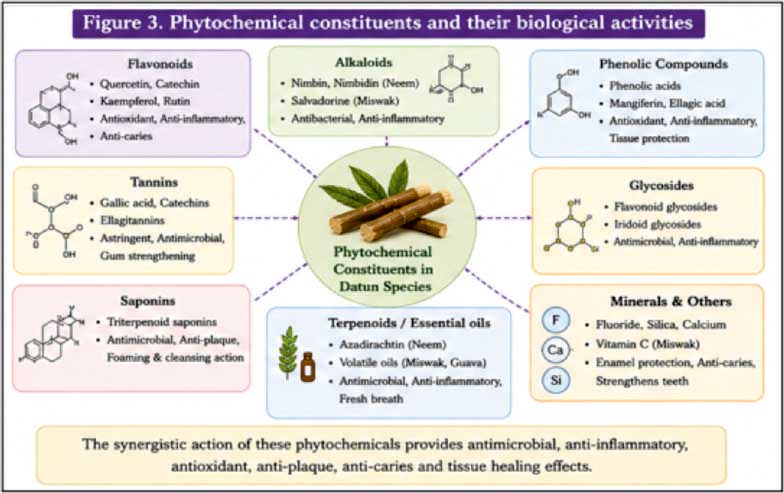
Table 2. Bioactive Compounds and Pharmacological Activities of Major Datun Species
| Botanical Name | Major Bioactive Compounds | Pharmacological Activities | Oral Health Benefits |
| Azadirachta indica (Neem) | Azadirachtin, nimbidin, nimbin, quercetin | Antibacterial, anti-inflammatory, antioxidant, antifungal | Reduces plaque, prevents dental caries, strengthens gums |
| Vachellia nilotica (Babool) | Tannins, catechins, gallic acid, flavonoids | Astringent, antimicrobial, antioxidant | Controls gingivitis, reduces gum bleeding, strengthens periodontal tissues |
| Salvadora persica (Miswak) | Salvadorine, silica, fluoride, sulfur compounds, vitamin C | Antibacterial, anti-plaque, anti-caries | Prevents plaque formation, freshens breath, protects enamel |
| Psidium guajava (Guava) | Quercetin, tannins, flavonoids, vitamin C | Anti-inflammatory, antimicrobial, antioxidant | Reduces oral inflammation and bacterial load |
| Mangifera indica (Mango) | Mangiferin, phenolic acids, flavonoids | Antioxidant, antimicrobial | Promotes oral hygiene and gum health |
| Syzygium cumini (Jamun) | Ellagic acid, anthocyanins, polyphenols | Antimicrobial, antioxidant | Prevents bacterial growth and oxidative stress |
| Mimusops elengi (Bakul) | Triterpenoids, tannins, saponins | Anti-inflammatory, astringent | Strengthens teeth and reduces gum bleeding |
| Ficus religiosa (Peepal) | Phenolics, flavonoids, sterols | Antioxidant, antimicrobial | Supports periodontal health |
CONTEMPORARY RELEVANCE IN MODERN INDIA
Despite the widespread availability of commercial toothbrushes and toothpaste, Datun continues to be used in many rural and tribal communities because of its affordability, accessibility, and cultural significance. In recent years, increasing consumer preference for herbal products, natural healthcare, and environmentally friendly alternatives has renewed interest in traditional chewing sticks. Scientific validation of their medicinal properties has further supported the integration of Datun into preventive oral healthcare and herbal dental product development.
| Parameter | Datun | Conventional Toothbrush |
| Cleaning mechanism | Mechanical + phytochemical | Mechanical |
| Antimicrobial compounds | Naturally present | Usually absent unless incorporated into toothpaste |
| Cost | Very low | Moderate |
| Availability | Readily available in many rural areas | Commercial purchase required |
| Environmental impact | Biodegradable and renewable | Mostly plastic; generates solid waste |
| Gum massage | Excellent | Moderate |
| Fresh breath | Natural phytochemicals provide deodorizing effect | Depends on toothpaste or mouthwash |
| Standardization | Variable according to plant species and user technique | Highly standardized |
| Scientific evidence | Strong for Neem, Miswak, and Babool; limited for some other species | Extensive evidence supporting routine use |
| Limitations | Technique-dependent, freshness required, potential abrasion if used improperly | Plastic waste, recurring cost, no intrinsic medicinal properties |
ENVIRONMENTAL AND SUSTAINABLE BENEFITS
Datun is a renewable, biodegradable, and environmentally sustainable alternative to plastic toothbrushes. Its use reduces plastic waste, minimizes environmental pollution, and encourages the sustainable utilization of locally available medicinal plants. Moreover, the traditional practice promotes biodiversity conservation, supports indigenous knowledge systems, and aligns with the principles of sustainable healthcare and environmentally responsible lifestyles.
CHALLENGES AND FUTURE PERSPECTIVES
The continued use of Datun is challenged by rapid urbanization, changing lifestyles, declining traditional knowledge, and the preference for commercial oral-care products. In addition, many medicinal plant species require further phytochemical characterization and well-designed clinical trials to establish standardized recommendations for their use. Future research should focus on validating the safety and efficacy of lesser-known Datun species, conserving medicinal plant diversity, and integrating scientifically proven traditional practices into evidence-based dentistry and public health programs.


Authors: Indian Council of Forestry Research and Education
Eco-Rehabilitation Centre (ICFRE-ERC), Prayagraj, UP