








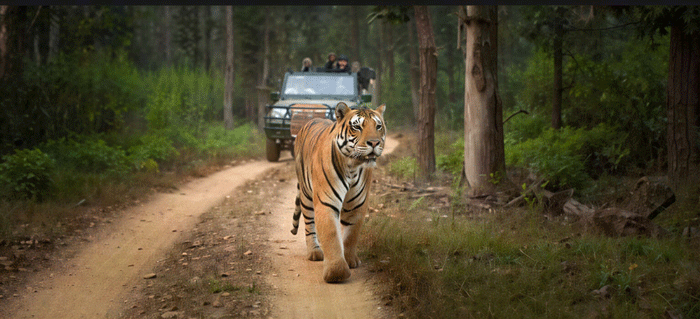
TIGERS AT RATAPANI WILDLIFE SANCTUARY: A Wild Heart Beats Just Outside Bhopal
Dr. Neeta Singh Jagdish Chandra
Imagine a forest where the roar of a tiger can be heard from the edge of a bustling city. That’s the reality at Ratapani Wildlife Sanctuary, a 1,271 km² stretch of dry-deciduous forest that now holds the title of Madhya Pradesh’s eighth tiger reserve and India’s 57th. Located only 40 km from Bhopal, the sanctuary is a living laboratory of how large predators can survive-and even thrive-when they share space with millions of people.
A GROWING TIGER POPULATION:
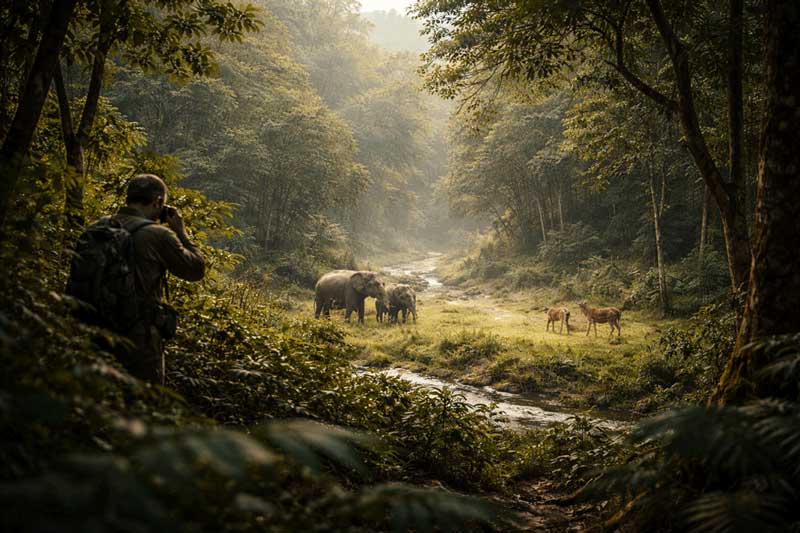
Camera traps and recent surveys show that Ratapani is home to roughly 90 tigers, a number that has risen steadily as prey species recover and the forest gains legal protection. The sanctuary’s dense teak woods, interspersed with grasslands and waterholes, provide the perfect hunting grounds for these apex predators. Yet the same habitat is criss-crossed by a busy railway line, a network of mines, and expanding townships, creating a patchwork where tigers and humans constantly intersect.
THE URBAN EDGE: “CITY TIGERS”
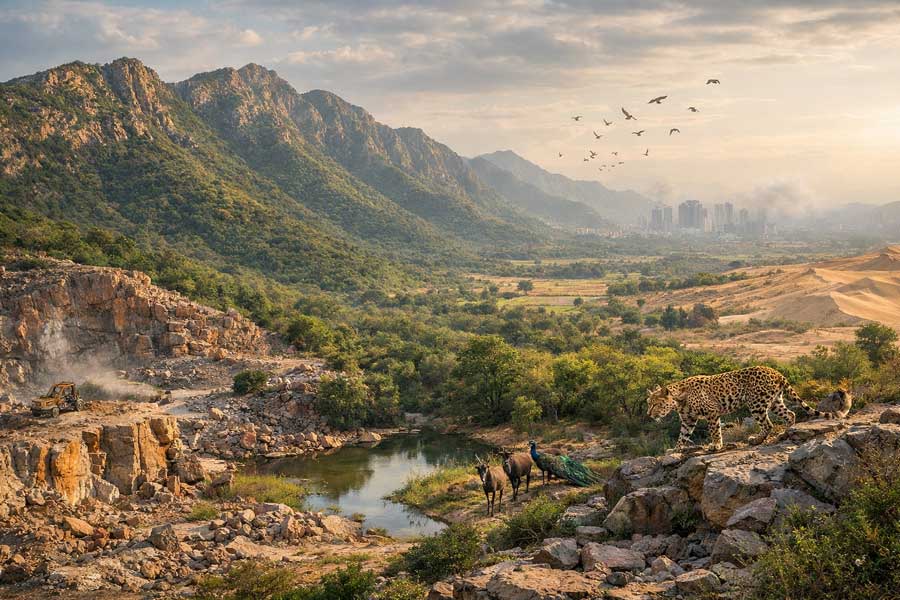
Because the sanctuary sits on the doorstep of Bhopal (population ~20 lakh), tigers have earned the nickname “city tigers.” Monitoring projects have identified at least three adult males, five females and a handful of cubs roaming the forest corridors that link the city’s green patches with the protected core. These urban wanderers often slip into residential areas, school campuses and even the sprawling MANIT campus, prompting both awe and alarm among locals.

MANAGING THE WILD-URBAN INTERFACE:
The Bhopal Forest Department has turned the challenge into a showcase of innovation:
An e-Eye surveillance –
A network of thermal and high-definition cameras streams live footage to a central control room, letting officers track tiger movements 24 x 7 and respond instantly to potential conflicts.
Community involvement –
Village Forest Committees receive training and compensation for livestock losses, while awareness campaigns teach residents how to coexist safely with their big-cat neighbors.
Infrastructure upgrades –
Tiger-proof fencing, reinforced forest roads, and regular checks on water holes and electric lines help keep both animals and people safe. These measures have already reduced cattle kills from a peak of 126 between 2010-2013 to a much lower level, easing tensions in fringe villages. Challenges Facing Ratapani’s Tigers (and the surrounding urban community)
1. Habitat fragmentation: The Delhi-Mumbai railway line and several state-highways cut through the sanctuary, creating physical barriers that tigers must cross to move between core forest blocks. Since 2015, at least seven tiger deaths have been directly linked to train collisions. Fragmented patches reduce the size of viable territories, forcing individuals especially dispersing sub-adults-to travel longer distances, which increases the likelihood of human-wildlife conflict.
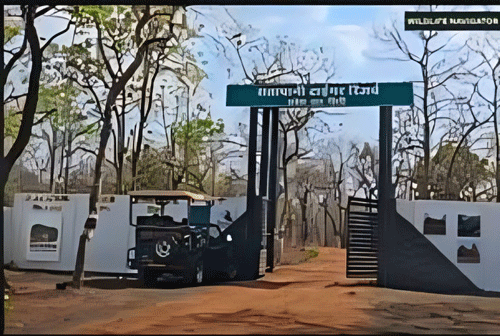
2. Mining and illegal extraction:
Approximately 38 active or abandoned mines (limestone, sand, and stone) lie within a 10-km buffer of the reserve. Even low-intensity mining alters water flow, degrades soil, and opens access roads that poachers and encroachers exploit. -Unregulated sand-mining along riverbeds depletes the water table, diminishing the quality of drinking holes for both prey and predators.
3. Prey base depletion:
– Historical over-hunting and competition with livestock have reduced herbivore density from roughly nine individuals per km² (2018) to just two per km² (2024). The main prey species-chital, sambar, and wild boar-are now scarce in several zones.
– A lean prey base compels tigers to expand their home ranges or turn to livestock, which in turn fuels retaliatory killings.
4. Human-wildlife conflict:
– Cattle predation remains the most common conflict. Although the Forest Department’s compensation scheme has lowered the number of incidents but, delayed payments and bureaucratic hurdles still leave many herders dissatisfied.
– Urban expansion brings residential colonies, schools, and industrial units right up to the sanctuary’s edge, increasing the frequency of sightings, accidental encounters, and occasional tiger straying into built-up areas.
5. Insufficient patrolling and infrastructure:
– The National Tiger Conservation Authority recommends one anti-poaching camp every 10 km²; Ratapani currently has less than half of the required patrolling camps. This leaves large swathes of forest vulnerable to poaching and illegal wood collection.
– Limited wireless communication and rugged terrain hamper rapid response to emergencies such as tiger rescues or poacher alerts.
6. Climate variability:
– Erratic monsoon patterns and rising temperatures affect the growth of grasses and water availability, further stressing both prey and predators. Drought years have been linked to increased tiger movement toward human settlements in search of water.
Looking Ahead: A Roadmap for Sustainable Co-existence
1. Strengthening the ecological corridor:
Railway mitigation: Install more underpasses and wildlife over-bridges along the Delhi-Mumbai line, equipped with motion-sensor cameras to monitor usage.
Road redesign: Retrofit existing highways with tiger-friendly fencing and crossing structures, and enforce speed limits in high-risk zones.
2. Prey restoration program:
Launch a multi-year “Prey Boost” initiative that combines habitat enrichment (planting native grasses, creating water holes) with translocation of chital and sambar from neighboring protected areas.
Involve local communities in breeding and rearing of native ungulates, providing them with a share of the offspring for restocking.
3. Mining regulation and reclamation:
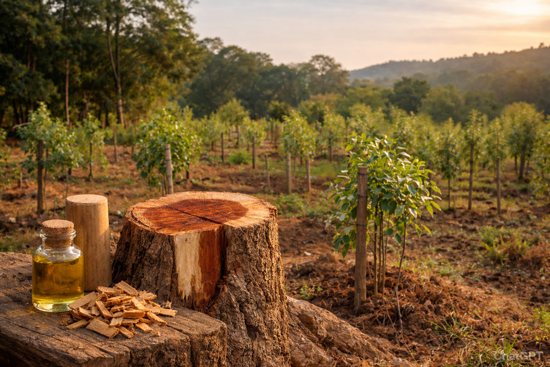
Conduct a rapid environmental impact audit of all mines within the 10-km buffer. Phase out or heavily restrict operations that show significant ecological damage. Mandate ecological reclamation-re-vegetation with native species, contour bunding to restore hydrology-funded by a “green levy” on extracted minerals.

4. Enhanced anti-poaching network:
Deploy a mixed-team of forest guards, local volunteers, and trained dogs in a grid-based patrolling system.
Equip patrols with handheld GPS, solar-powered radios, and night-vision gear, supported by a central command centre that receives real-time alerts from the existing e-Eye camera network.
5. Community-centric livelihood models:
Expand the “Tiger-Friendly Village” scheme: villages that adopt zero-livestock-predation practices receive priority for micro-credit, insurance, and infrastructure (e.g. solar lighting, water tanks).
Promote eco-tourism (guided tiger safaris, bird-watching walks) with revenue-sharing agreements that directly benefit fringe communities.
6. Technology-driven monitoring and early warning:
Integrate satellite-based land-use change detection with the existing camera network to flag new encroachments within 48 hours.
Develop a mobile app for residents to report tiger sightings or livestock predation instantly, feeding data into a GIS dashboard used by forest managers.
7. Climate-resilient water management:
Construct rainwater harvesting structures and deep-bore wells in drought-prone sections of the sanctuary to maintain year-round water sources.
Implement a “water-sharing” agreement with nearby agricultural fields, allowing limited irrigation during dry spells in exchange for protecting forest water sources.
8. Policy and legal reinforcement:
Fast-track the formal declaration of Ratapani as a “Tiger Reserve” (already in progress) to unlock additional central funding and stricter legal protection.
Strengthen inter-agency coordination between the Forest Department, Railway Authority, Mining Department, and municipal bodies to enforce wildlife-friendly practices.
9. Research and adaptive management:
Establish a dedicated research unit at Ratapani to study tiger movement ecology, prey dynamics, and the effectiveness of mitigation measures.
Use findings to refine management plans annually, ensuring that strategies remain responsive to emerging challenges.
In summary, Ratapani’s tigers sit at a crossroads: the pressures of urban growth, mining, and a dwindling prey base could erode the gains made over the past decade, or, with decisive action, the sanctuary could become a flagship example of urban-wildlife coexistence. By weaving together habitat restoration, community participation, and cutting-edge technology, the path forward can secure a viable tiger population while delivering tangible benefits to the millions living on its doorstep.


ME & MY EARTH