– Abhishek Sikdar, Dr. Harshit Pant
INTRODUCTION
In the Indian Himalayan Region, forests are not only green landscapes on a map. They are part of everyday life. Many rural households depend on forest produce for income, food, medicine, fuel, and seasonal livelihood support. Leaves, herbs, seeds, gums, honey, and other non-timber forest products move through local markets and eventually reach distant buyers. In theory, this should create income for communities and incentives for conservation. In practice, the system is often far less fair.
One major problem is that the movement of forest produce is difficult to track. A collector may know what has been gathered, but not the final price. A trader may know the market, but not the origin of the product in detail. A processor may want clean records, but the supply chain may have too many missing links. As a result, the system becomes opaque. When records are weak, payments become slow, and trust breaks down.
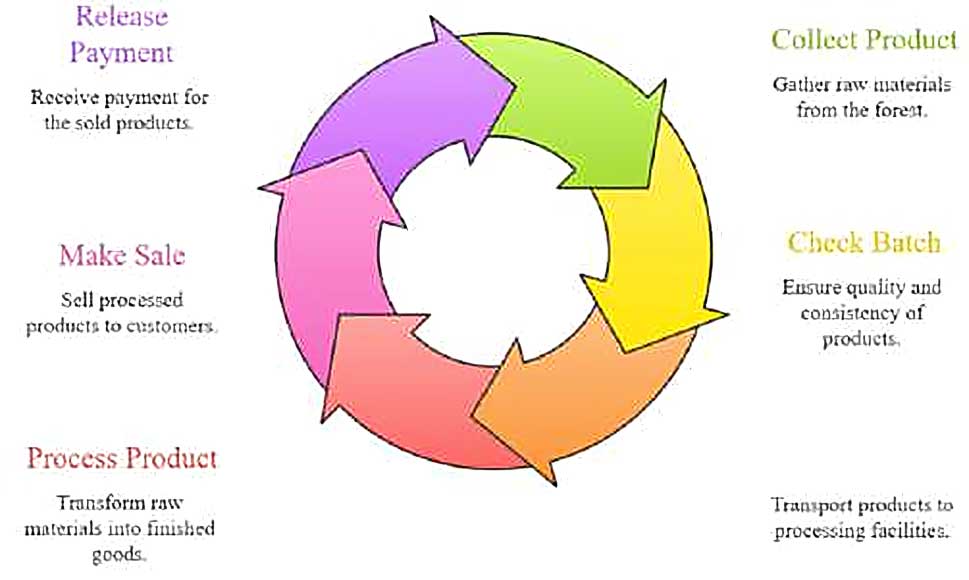
This is where blockchain becomes interesting. The word sounds technical, but the idea is simple. Blockchain is a digital system that stores records in linked blocks. Once recorded, the information cannot be changed easily. That makes it useful for tracking products. If a batch of forest produce is entered into such a system at the point of collection, the same record can follow it through storage, transport, processing, and sale.
WHAT DOES BLOCKCHAIN MEAN?
Blockchain is often linked to cryptocurrency, but that is only one use of it. In forest governance, its value lies in recording trustworthy information. Think of it as a digital notebook that many people can see, but no one can secretly erase or rewrite.
Each time something important happens in the forest produce chain, the event can be recorded. Because the entries are time-stamped and linked, the entire chain becomes traceable. This is especially useful for products whose quality and origin matter, such as medicinal plants, herbal raw material, wild honey, and resin.
For Himalayan communities, this matters because the market often rewards trust. Buyers want to know where a product came from. They want assurance that it was collected legally and sustainably. If that information is available in a secure digital record, the product may gain value. At the same time, collectors may gain a clearer record of what they sold and what they should receive.
WHY CURRENT SYSTEMS STRUGGLE?
The present system has several weak points. First, records are often scattered. Some are on paper, some in office files, and some are with local traders. Second, the same product may change hands several times without a full record of each step. Third, collectors usually have little information about the final price. Fourth, payment delays are common, especially when the chain includes several intermediaries.
These problems are not minor. They affect both livelihoods and conservation. When communities do not receive fair returns, there is less reason to follow sustainable harvesting rules. When products cannot be traced, it becomes harder to prove origin, quality, or legality. That weakens market confidence and discourages long-term investment in forest-based enterprises.
HOW BLOCKCHAIN COULD WORK IN THE HIMALAYA?
A blockchain system for forest produce does not need to be complex. It can start with a few simple steps. When a product is collected, the batch can be assigned a digital identity. Basic details such as species name, collection date, location, quantity, and collector group can be recorded. A local validator, such as a trained community member or field official, can confirm the entry. Later, when the batch is transported or processed, each movement can be updated in the system. Finally, when the product is sold, the payment can be linked to the verified transaction.
This system creates a digital trail that can be checked by authorized users. It does not remove the need for field verification. On the contrary, it depends on honest and accurate field entry. But once the entry is made correctly, it becomes much easier to track the product.
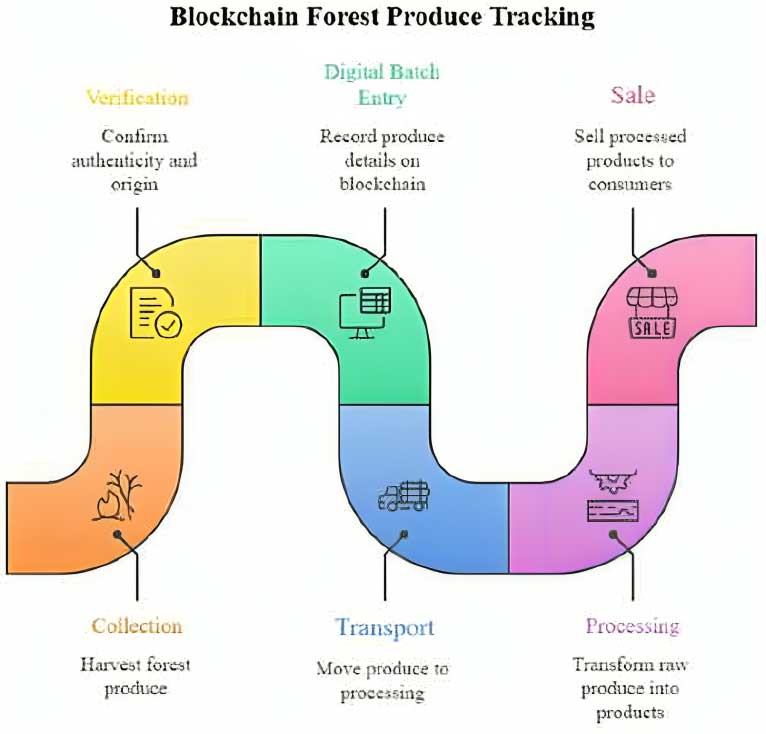
Table 1. Traditional forest produce chain versus blockchain-enabled chain
| Aspect | Traditional System | Blockchain-Enabled System |
| Record keeping | Paper-based and scattered | Shared digital record |
| Traceability | Lost after aggregation | Batch-level tracking |
| Payment | Delayed and uncertain | Linked to verified events |
| Market confidence | Low to moderate | Higher due to transparency |
| Dispute handling | Manual verification | Digital audit trail |
WHERE BLOCKCHAIN CAN HELP MOST?
The strongest use of blockchain is not everywhere at once. It is most useful where the product is valuable, traceability matters, and the number of actors is manageable. In the Himalayan context, this includes several products.
Medicinal and aromatic plants are a clear example. Their identity, quality, and origin affect price. If a buyer can verify that the material came from a known source and was handled properly, confidence increases.
Honey is another example. Consumers increasingly want to know whether honey is authentic, where it was collected, and how it was processed. A digital trace can improve trust.
Resins, gums, and selected tree-based products can also benefit, especially where transit and documentation are important.
The same logic can be extended to community forest products linked to local enterprises. When records are clear, communities are better positioned to negotiate, certify, and sell.
SMART CONTRACTS AND FAIR PAYMENTS
One of the most useful features of blockchain is the smart contract. A smart contract is a digital rule that releases payment when agreed conditions are met. For example, once a batch has been verified, a part of the payment can be released immediately. When the batch reaches the processor, another installment can be paid. When the final sale is completed, the rest can be transferred. This would reduce long delays and make the system more predictable.
For collectors, this is important. Forest-based livelihoods are often seasonal and cash-sensitive. Waiting for payment for weeks or months can create hardship. A smart contract does not eliminate all risks, but it can reduce uncertainty and make payment terms more visible.
Table 2. Example of smart contract use in a forest produce chain
| Trigger Event | System Response | Benefit |
| Batch collected and verified | Advance payment released | Immediate financial support |
| Batch reaches processor | Second payment released | Recognizes logistics stage |
| Final sale confirmed | Balance payment released | Fair revenue distribution |
| Verification failure | Payment paused | Reduces fraud |
CONCLUSION
The IHR needs forest-based livelihoods that are not only productive, but also fair and transparent. Blockchain can help by creating a secure digital trail for forest produce, supporting quicker payments, and improving traceability. It may also strengthen monitoring of sustainable harvest and ecosystem-service claims.
But the system will work only if it is built around local realities. Field verification, community participation, legal compliance, and simple user-friendly design are non-negotiable. If these conditions are respected, blockchain can become a useful support tool for Himalayan forest governance.
In a region where forests support both biodiversity and people, trust is not a luxury. It is the basis of sustainable trade. A properly designed blockchain system may help build that trust, one verified batch at a time.
To move from concept to impact, pilot implementation in selected high-value forest products within the IHR is essential. Integrating blockchain with existing institutional frameworks and community-based monitoring systems can create a scalable model for a transparent, equitable, and sustainable forest-based bioeconomy.
REFERENCES
1. Food and Agriculture Organization (FAO). 2020. Global Forest Resources Assessment 2020. Rome.
2. Forest Survey of India (FSI). 2023. India State of Forest Report 2023. Dehradun.
3. IPCC. 2021. Climate Change 2021: The Physical Science Basis. Cambridge University Press.
4. MoEFCC. 2015. India’s Intended Nationally Determined Contribution. Government of India.
5. NITI Aayog. 2020. Blockchain: The India Strategy. Government of India.
Authors:
1. Researcher, Centre for Socio-Economic Development (CSED), G.B. Pant National Institute of Himalayan Environment, Kosi-Katarmal, Almora 263643, Uttarakhand, India
2. Scientist, Centre for Socio-Economic Development (CSED), G.B. Pant National Institute of Himalayan Environment, Kosi-Katarmal, Almora 263643, Uttarakhand, India