









MEDICINAL USES OF PITHECELLOBIUM DULCE AND ITS HEALTH BENEFITS
-Kaushik V Kulkarni, Varsha R Jamakhandi
ABSTRACT:
Pithecellobium dulce has been utilized by antiquated individuals in treating various sorts of ailments due to its restorative properties. The bark and pulp being astringent and haemostatic are used to treat gum ailments, toothache and bleeding. Bark extracts are used for chronic diarrhea, dysentery, constipation and tuberculosis. Extract of leaves is employed as a remedy for indigestion and to prevent spontaneous abortion and for gall bladder ailments and to treat both open and closed wounds. Ground seed is used for treating ulcers. Studies also shows that it might help in curing diabetes, inflammation, cancer, tuberculosis, veneral diseases, bilious disorders, fever, cold, sore throat, malaria, skin pigmentation, acne and pimples, dark spots, conjunctivitis, irritable bowel syndrome, pain, eczema, panophthalmitis, leprosy. Studies have evaluated its antioxidant, anti hyperlipidemic, anti-septic,
anti-bacterial properties.
Keywords: Pithecellobium dulce, treatment for constipation, fever, sore throat, anti-bacterial, abortificient
1. INTRODUCTION:
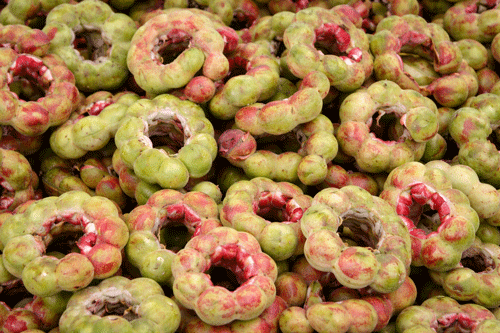
It originated from Mexico, then went to America, Central Asia and then to India. Although, these trees have been seen all along the highways in India, no one knew about its culinary use. It resembles tamarind and is widely called as Manila Tamarind. It is an acrid eatable organic fruit for the most part utilize for cooking, contains high wholesome esteem and various medical advantages for body. Besides being a viable normal cure, it is more moderate contrasted with high cost medicines in clinics and restorative centers. Studies have concluded that hydro alcoholic fruit extract of Pithecellobium dulce (HAEPD) [1] can be used safely for experimental and clinical trials. This study was carried out to evaluate acute and sub acute toxicity profile of HAEPD in 2010. According to the studies performed in 2012, scientists have validated the anti microbial potential of traditionally important plant, Pithecellobium dulce [2]. The bark and pulp of Manila Tamarind is used as a traditional remedy against gum ailments, toothache, and hemorrhage. Bark extract is also used against dysentery, diarrhea, and constipation. An extract of leaves is used for gall bladder ailments and to prevent miscarriage. Seeds when grounds are used to cleanse ulcers. Numerous studies have been performed on anti-oxidant, anti- inflammatory, anti- diabetic, anti-cancer properties of Manila tamarind. It provides relief from pain, eczema, fever, cold, sore throat, pigmentation, acne and pimples.
1.1 BIOLOGICAL SOURCE:
Botanical Name: Pithecellobium dulce
Family Name : Leguminosae
Parts Used : Bark, leaves, seeds, flowers, pulp
1.2 COMMON NAMES
Hindi : Vilayati imli, Jungli jilebi
Marathi : Ingraji chinch
Tamil : KodukkaPuli
English : Manila Tamarind, Monkey pod, Madras thorn
1.3 CHEMICAL CONSTITUENTS:
- Tannin, 25.36%; fixed oil, 18.22%, olein.
- A glycoside quercitin has been isolated.
- Seeds have been reported to contain steroids, saponins, lipids, phospholipids, glycosides, glycolipids and polysaccharides.
- Bark yields 37% tannins of the catechol type.
- Leaves yield quercitin, kaempferol, dulcitol and afezilin.
- Fatty acid analysis of seed extract yielded 9 saturated and 17 unsaturated fatty acids. Total protein content was highest in the seeds (50.3-67.1%), followed by stems, roots, leaves, flowers, and fruits.
- Ethanolic extract of fruits yielded ten compounds viz. (1) 2, 5, 6-trimethyl 1, 3-oxathiane, (2) trans-3-methyl-2-Npropylthiophane, (3) 2-furan carboxaldehyde-5(hydroxymethyl), (4) D-pinitol, (5) heptacosanoic acid, (6) hexadecanoic acid, (7) tetracosanol, (8) 22-tricosenoic acid, (9) methyl-2-hydroxy icosanoate and (10) stigmasterol.
- Evaluation of seed protein flour showed a protein content of 39.22%, calcium 48 mg, and phosphorus 542 mg/100 g. Major amino acids were glutamic acid, arginine, aspartic acid, lysine, valine, threonine and leucine. Ratio of essential to nonessential amino acid was 0.61. Total polyphenol content was 294 mg/100g.
- GC-MS study of leaves yielded bioactive constituents: phytol, anthracene, 9(3butenyl), diisooctyl phthalate, 13docosenamide, 3,6,9-triethyl3, 6, 9trimethyl formic acid, cyclotetrasiloxane, octamethyl, 1(+) ascorbic acid 2,6 dihexadecanoate.
1.4 NUTRITIONAL VALUE OF MANILA TAMARIND
| Energy | 78 kcal |
| Water | 77.8% |
| Protein | 3% |
| Fat | 4% |
| Carbohydrate | 18.2% |
| Fiber | 1.2% |
| Ash | 6% |
| Calcium (1.3% RDI) | 13 mg |
| Phosphorous (4.2% RDI) | 42mg |
| Iron (2.7% RDI) | 5mg |
| Sodium | 19mg |
| Potassium (6.3% RDI) | 222mg |
| Vitamin A | 15mg |
| Thiamin/B1 (16.6% RDI) | 24mg |
| Riboflavin/B2 (5.8% RDI) | 10mg |
| Niacin/B6 (3% RDI) | 60mg |
| Vitamin C (221% RDI) | 133mg |
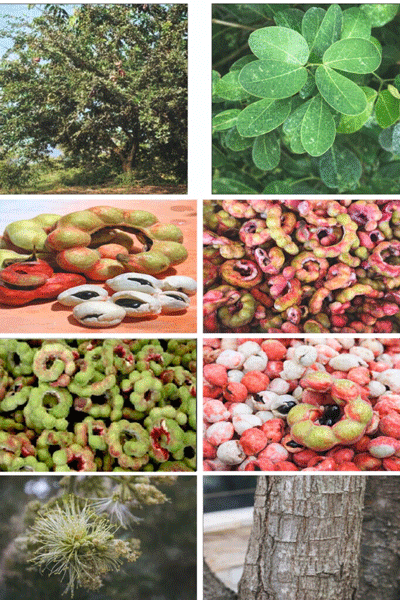
1.5 MEDICINAL USES
- Anti-Inflammatory / Antibacterial: Study of the fresh flowers of Pithecellobiumdulce yielded a glycoside quercitin. The activity of the flavonol glycoside confirmed its anti-inflammatory and antibacterialproperties
- Antioxidant: Study of the aqueous extract of Pithecellobiumdulce leaves revealed phenolics including flavonoids and showed potent free radical scavenging activity.
- Anti-inflammatory: Anti-inflammatory triterpenesaponins of Pithecellobiumdulce: A new bisdesmodictriterpenoidsaponin, dulcin, was isolated from the seeds of PD.
- Anti-tuberculosis / Antimicrobial: Hexane, chloroform and alcoholic leaf extracts were studied for activity against Mycobacterium tuberculosis strains. The alcoholic extract showed good inhibitory activity and antimicrobial activity against secondary pathogens
- Anti-Diabetic: Study of ethanolic and aqueous leaf extract of P dulce in STZ-induced diabetic model in rats showed significant activity, aqueous more than the alcoholic extract, comparable to glibenclamide.
- Anti-Ulcer: Study of the hydroalcoholic extract of PD was found to possess good antioxidant activity and suggests possible antiulcer activity with its free-radical scavenging and inhibition of H, K-ATPase activities comparable to omeprazole. Phytochemical screening yielded flavonoids – quercetin, rutin, kaempferol, naringin, daidzein.
- Hepatoprotective: Study of an aqueous extract of P. dulce in a murine model showed hepatoprotection against CCl4-induced oxidative impairments probably through its antioxidative property. Results were supported by histological findings
- CNS Depressant: Study evaluating the locomotor activity of aqueous and alcoholic extracts of PD in albino mice showed significant CNS depression, the alcoholic extract exhibiting greater effect when compared to chlorpromazine. The activity was attributed to an increase in the concentration of GABA in the brain.
- Analgesic / Anti-Inflammatory: Study of methanol extract showed significant anti-inflammatory and analgesic effects comparable to standard drugs.
- Antioxidant / Antibacterial: Study of fruit peel for antioxidant and antibacterial potential revealed significant activity in the ethyl acetate, methanolic, and aqueous extracts.
- Antioxidant: Study evaluated aqueous and methanol extracts of seeds for antioxidant potential. Results showed good dose-dependent free radical scavenging activity in all the models. The activity was attributed to high phenolic contents.
- Hypolipidemic: Study evaluated the anti- hyperlipidemic activity of an aqueous extract of leaves against triton induced hyperlipidemia in rats. Results showed lipid effects with a decrease in total serum cholesterol, LDL, and an increase in serum HDL cholesterol level.
- Adulticidal: Study evaluated the adulticidal activity of various solvent leaf and seed extracts against Culexquinquefasciatus. Results showed the crude extract of P. dulce has excellent potential for controlling filiariasis vector mosquito Cxquinquefasciatus.
- Antimicrobial: Study evaluated the antimicrobial activity of leaf of P. dulce against 20 pathogenic microorganisms. Results showed extracts possess bioactive compounds with significant antimicrobial activities.
- 𝛼-Glucosidase and 𝛼-Amylase: Study evaluated bark and leaves of P. dulce for a-amylase and a-glucosidase inhibition in vitro. a-amylase and a-gluscosidase inhibitors from food-grade plant sources offer an alternative approach for the treatment of post-prandial hyperglycemia by decrease glucose release from starch and delaying carbohydrate absorption. Results confirmed a-glucosidase and a-amylase inhibitory activity of a methanol and ethanol extract.
- Skeletal Muscle Relaxant / CNS Depressant: Study showed an acutely administered single dose of aqueous and ethanolic extracts of leaves posses skeletal muscle relaxant activity and CNS depressant activity but no anticonvulsant action.
- Larvicidal & Ovicidal against Mosquito Vectors: Study evaluated various extracts of P. dulce for larvicidal and ovicidal potential against mosquito vectors, Anopheles stephensi and Aedesaegypti. All leaf and seed extracts showed moderate larvicidal and ovicidal effects; however, the methanol extract of leaf showed the highest larval activity. Results suggest the seed and leaf extracts have potential as an eco-friendly option for mosquito vector control.
- Anti-Diabetic / Fruits: Study evaluated the antidiabetic potential of P. dulce fruits in STZ-induced experimental diabetes in rats. Results showed significant reduction in blood glucose, glycosylated hemoglobin, urea and creatinine. There was also improved glycogen contact upon treatment with the extract.
- Cardioprotective / Fruit Peel: Study evaluated the effect of P. dulce peel in isoproterenol (ISO) induced myocardial infarction in adult male Wistar rats. ISOinduced MI in rats showed increase in marker enzymes. Pretreatment PD fruit peel extracts positively altered the activities of marker enzymes and biochemical parameters in ISO-induced rats.
- Anthelmintic / Leaves: Study evaluated leaf extracts of P. dulce in three different concentrations for anthelmintic activity against Pheretimaposthuma. The aqueous extract was more potent than the alcoholic extract, with activity comparable to the reference drug piperazine citrate.
- Adulticidal / Aedesaegypti: Study evaluated the toxicity and mosquito adulticidal activity of different solvent leaf and seed extracts of P. dulce against dengue vector, Aedesaegypti. Among tested solvents, the leaf and seed methanol extract showed maximum efficacy.
- Antiulcer / Fruits: Study evaluated the antiulcer activity of hydroalcoholic fruit extract of Pithecellobiumdulce on a cysteamine induced duodenal ulcer model in male albino Wistar rats. Rats preadministered with HAEPD showed significantly reduced ulcer score compatible to that of ranitidine pretreated rats. Results showed antioxidant and cytoprotective antiulcer activity.
- Nanoparticles / Fruits: Study reported on the biosynthesis of titanium dioxide nanoparticles using Pithecellobiumdulce and Lagenariasiceraria aqueous leaf extract. The nanoparticles synthesized by biological method showed a higher antioxidant potential and antimicrobial activity than chemically synthesized.
- Polysaccharides / Antioxidant: Study secluded water soluble PDP polysaccharides from P. dulce seeds. Fractions were tested for in vitro antioxidant capacities by DPPH, h202 and reducing power assay. Results showed activity in a dose dependent manner comparable to standard ascorbic acid.
- Antibacterial: The leaf extract of P.dulce showed good inhibition against gram positive organisms. The highest inhibition was noted S.epidermidis (24mm), P. acne (14mm), and S. aureus (11mm).
- Antidiarrheal: Study evaluated the antidiarrheal effect of an ethanol extract of Pithecellobiumdulce using castor oil induced diarrhea in rats. Results showed a dosedependent antidiarrheal effect (p<0.01) more effective than Loperamide, the standard antidiarrheal drug..
- Inhibitory Effect on Intestinal a-Glucosidase and Pancreatic a-Amylase / Seeds: Study of a methanolic extract of seeds showed inhibitory action on a-amylase and a-glucosidase enzymes. Activity may be attributed to their phenolic and triterpene constituent such as oleanolic acid. Results suggest a potential for a function food that can modulate key carbohydrate hydrolyzing enzymes to be of use in the management of diabetes, especially in the control of postprandial hyperglycemia
1.6 HEALTH BENEFITS
- Works as Antiseptic
- Lightens Skin
- Prevents Hair Loss
- Treats Oily Scalp
- Aids Weight Loss
- Good for Pregnant Women
- Treat Bilious Disorders
- Treats Fever
- Cures Malaria
- Treats Jaundice
- Regulates Blood Circulation
- Controls Blood Sugar Levels
- Boosts Immune System
- elieves Inflammation
- Cures Mouth Ulcers
- Prevents Cancer
- Eliminates pigmentation
- Cures Acne and Pimples
- Removes Dark Spot
- Natural Skin Moisturizer
- Used to treat Venereal diseases (sexually Transmitted Infection)
- Leaves – Remedy for indigestion Bark – curative for bowel movement/constipation
- Manila tamarind is also prescribed for diabetics
- High in diet C which contributes to the anti-oxidant property
1.7 MANILA TAMARIND CONTAINS
- Vitamin E – this contributes to aging.
- Vitamin B1-this helps to nourish the nerves and the brain.
- Vitamin B2 – this contributes to the skin, nails and hair health.
- Vitamin B3 (niacin) – which contributes to decrease levels of cholesterol.
- Calcium- this helps to give a boost to bones and enamel.
- Phosphorus – this contributes to the expansion and restoration of body.
- Iron -this contributes to the prevention of fatigue of the body.
2. REFERENCES:
1. Megha J, Geetha A. Acute & Subacute toxicity study of hydro-alcoholic fruit extract of pithecellobium dulce. US National Library of Medicine National Institutes of Health. 2012; 26(12):1167-1175.
2. Mukesh Kumar, Kiran Nehara, Duhan JS. Phytochemical analysis & antimicrobial efficacy of leaf extract of ~703~ Journal of Pharmacognosy and Phytochemistry Pithecellobium Dulce. Asian Journal of Pharmaceutical & Clinical Research. 2013: 6(1):70-76.
3. http://www.stuartxchange.com/Kamatsile.html [Last accessed on 5 Feb 2018]
4. https://www.fruitsinfo.com/contact_us.php [Last accessed on 5 Feb 2018]
5. Atul Selvan S, Muthukumatan P. Analgesic & Antiinflammatory activity of leaf extract of Pithecellobium Dulce Benth, International journal of PharmaTech research. 2011; 3(1):337-341.
6. Hepziban W, Vajida J, Balaji M. Studies on antibacterial activity of Pithecellobium Dulce (Roxb.) Benth against food pathogens – Gram negative bacteria. International journal of novel trends in pharmaceutical science. 2017; 7(3):76-80.
7. Watsika Vichaidrt, Panumart Thongyoo. Antioxidant & antibacterial properties of leaf extract of Pithecellobium Dulce, available at www.natpro5.psu.ac.th, 66-68.
8. Shankar D Katekhaye, Maheshkumae S Kale. Antioxidant & free radical scavenging activity of Pithecellobium Dulce (Roxb). Benth wood bark & leaves, free radicals & antioxidants. 2012; 2(3):47-50..
9. Raghu Praveen A et al. Anti diabetic activity of bark extract of Pithecellobium Dulce benth in alloxan- induced diabetic rats. Natural products. An Indian journal. 2010; 6(4):201-204.
10. Jayaraman Megala, Panner Devaraju. Pithecellobium dulce fruit extract. Antiulcerogenic effect by influencing the gastric expression of H+-ATPase & Mucosal Glycoprotein’s. Journal of young pharmacist. 2015; 7(4):493-499.
11. Kasarla Raju, Jagadeshwar K. Photochemical investigation& and hepatoprotective activity of ripe fruits of Pithecellobium Dulce in albino rats. Scholar’s academic journal of pharmacy. 2014; 3(6):449-454.
12. Sundarrajan T, Raj Kumar T et al. Hypolipidemic activity of Pithecellobium Dulce Bench. in Triton Wr1339 Induced Hyperlipidemic Rats. International Journal of Chemical and Pharmaceutical Sciences. 2010; 1(2):5053.
13. Govindarajan Marimuthu, Rajeswary Mohan. Mosquito larvicidal & ovicidal properties of Pithecellobium Dulce. (Roxb) Benth. (Fabaceae) against Culex quinque fasciatus say (Diptera: Culicidae) Journal of Coastal Life medicine. 2014; 2(4):308-312.
14. Pakuthariva Thangarajam et al. Cardio protective activity of Pithecellobium Dulce on isoproterenol- induced myocardial infarction in rats. International journal of pharmaceutical science review and research. 2015: 30(1):133-136.
15. Choday Venu, Ramanjaneyulu K, Satish Reddy N, Vijayalaxmi B, Bhavana Alla. Evaluation of anti diarrheal activity of ethanolic extracts of Pithecellobium Dulce on Castor oil induce diarrhea in albino wistar rats. Discovery. 2016; 52(246):1494-1496.
16. Dnyaneshwar N, Archana J. In vitro inhibitory effects of Pithecellobium dulce (Roxb.) Benth. Seeds on intestinal a-glucosidase and pancreatic a-amylase. J Biochem Tech. 2013; 4(3):616-621.
17. Juan Fernando Pio Leon et al. Nutritional & nutraceutical characteristics of white & red Pithecellobium dulce (Roxb) Benth fruits, FDP sciences. 2012; 68:397-408.
18. https://xocialhive.com/health-benefits-of-eating-manilatamarind-or-camachile/ [Last accessed on 5 Feb 2018]
19. Samina Kabir Khan Zada et al. Phytochemical studies on Pithecellobium Dulce Benth, a medicinal plant of Sindh, Pakistan, Pak. J Bot. 2013; 45(2):557-561.
Author is
Kaushik V Kulkarni
Department, Quality Assurance, DSTS Mandal’s College of Pharmacy,
Solapur, Maharashtra, India
Varsha R Jamakhandi
Department, Quality Assurance, DSTS Mandal’s College of Pharmacy,
Solapur, Maharashtra, India