Presented by
Sharath Chandra Vanga1 Shreetika Dewangan2 Shrushti Dubey3
Siddhant Das4 Srihari J5 Stuti Karn6 Sunny Dubey7
Why Ecotourism Needs Valuation
- Introduction to Ecotourism Valuation Ecosystems provide many valuable services to society.
- Most of these services are unowned and unaccounted for in markets.
- Most of these services are unowned and unaccounted for in markets.
- Ecotourism sites like national parks and forests generate large economic value.
- However, the revenue generated is often insufficient to maintain ecological integrity.
Problem & Proposition
Can GST Help Value Ecotourism?
Problem: Ecotourism sites generate value but receive limited financial returns.
Proposition: Can the Goods and Services Tax (GST) framework help capture the Total Economic Value (TEV) of ecotourism?
GST: Indirect tax on goods and services in India.
Ecotourism: Responsible tourism that conserves the environment and benefits local communities.
IMPLEMENTATION MECHANISM
BEYOND THE TICKET – THE TEV FRAMEWORK

- The Core Concept: We often value ecotourism sites only by what we spend there. In reality, their value is the Total Economic Value (TEV).
- Direct Use Value (The Visible Economy):
- Tangible activities: Entrance fees, guided trekking, and wildlife photography.
- Revenue that flows directly into local pockets and park management.
THE INVISIBLE BENEFITS – INDIRECT & FUTURE VALUE
- Indirect Use Value (Regulating Services):
- Carbon Sequestration: The forest acting as a lung to offset emissions.
- Water Recharge: Natural filtration and flood control for nearby communities.
Non-Use Values:
- Existence Value: The satisfaction of knowing the tiger exists, even if you never see it.
- Bequest Value: Ensuring the forest remains intact for the next generation.
THE POLICY GAP – THE “GST” PROBLEM
- The Current Reality: Taxation (GST) is currently limited to Direct Use only (hotel stays and entry tickets).
- The Problem: By only taxing the “commercial” side, we ignore the larger ecosystem value.
- This leads to under-investment in conservation because the “Indirect” benefits aren’t being captured or reinvested.
- Key Takeaway: We need a valuation system that recognizes nature as a provider of services, not just a backdrop for a vacation.
GST RATES IN THE TOURISM & HOSPITALITY SECTOR
Current GST Structure in Tourism

- Accommodation Services: Hotel accommodation services traditionally fall under 12% and 18% GST slabs depending on the room tariff.
- Mid-range hotels: Rooms with tariffs up to 7,500 per night were taxed at 12% GST
- Luxury accommodation: Rooms above ₹7,500 per night attract 18% GST
Application To Ecotourism Services
- Ecotourism facilities such as eco-lodges, wildlife resorts, and nature camps usually fall within the same hospitality GST slabs, depending on pricing and service bundling.
- Tour operator services related to eco-tourism packages are generally taxed at 5% without input tax credit (ITC) or 18% with ITC, depending on the structure of the service.
LIMITATION OF GST IN PROTECTING NATURAL CAPITAL
GST as a Consumption Tax
- The Goods and Services Tax (GST) is primarily a consumption-based tax, meaning it is charged on the transaction of services such as accommodation, tours, and hospitality experiences.
What GST Currently Taxes – Accommodation (hotel stays, eco-lodges), Food and restaurant services, Tour packages and transportation services
What GST Does Not Capture
- Depreciation of natural capital such as forests, coral reefs, wildlife habitats, or fragile mountain ecosystems used by tourism.
- Environmental management costs, including biodiversity conservation, waste management, or ecosystem restoration in tourist areas.
THE POLICY CHALLENGE – BALANCING TOURISM GROWTH AND CONSERVATION
Challenge 1: High GST May Discourage Tourism
- Higher tax rates increase travel costs, which can reduce demand.
- Tourism price sensitivity is high; a 10-20% increase in accommodation cost can significantly affect domestic travel decisions in budget segments.
Challenge 2: Low GST May Undermine Conservation Funding
- If taxes are too low, the government may lose potential revenue that could be used for maintaining protected areas, wildlife reserves, and ecotourism infrastructure.
Policy Dilemma
- High GST: reduces tourism competitiveness.
- Low GST: risks underfunding environmental protection.
HOW DO WE ACTUALLY IMPLEMENT GST
The Concept of “Green GST”
- Fiscal Shift: Transitioning from a tax on human consumption to a tax on Natural Capital usage.
- Internalizing Externalities: Using GST as a mechanism to account for resources that are currently “un-owned and unaccounted for” in market prices.
HOW DO WE ACTUALLY IMPLEMENT GST
The Valuation-Tax Linkage
- Evidence-Based Taxation: Using the Travel Cost Method (TCM) to determine the site’s economic value through revealed preferences.
- Capturing Consumer Surplus: Identifying the difference between what tourists actually pay and their maximum willingness to pay, allowing for a scientifically justified tax rate.
HOW DO WE ACTUALLY IMPLEMENT GST





The Principle of Revenue Circularity
- Earmarking Funds: Transitioning from a general pool tax to a “Ring-fenced” model where revenue is tied to the site of collection.
- Replenishment & Rehabilitation: Legally mandating that tax proceeds fund the Maintenance of Ecological Infrastructure (e.g., preventing soil erosion and enhancing groundwater recharge)
Shadow Pricing


Shadow pricing estimates the true economic value of natural resources. It captures costs not reflected in market prices such as biodiversity loss, ecosystem degradation, and environmental Helps determine the real cost of visiting ecologically sensitive sites
Why Shadow Pricing is Important
Captures environmental externalities not reflected in market prices Helps policymakers determine the true cost of environmental. degradation Useful in sustainable tourism planning and ecological taxation


Example
- Suppose a national park attracts 100,000 tourists annually, generating 2 crore in tourism revenue
- Environmental economists estimate that ecosystem damage costs 30 lakh annually
- Shadow price of ecosystem damage
- Shadow Price = Environmental Damage Cost/Number of Visitors
- Shadow Price = 30,00,000/100,000 Shadow Price = 30 per tourist
BENEFIT – COST ANALYSIS
- Benefit-Cost Analysis is a method used to evaluate whether the economic benefits of a project exceed its costs. It helps governments and organizations decide whether a policy or project should be implemented
- Compare GST revenue generated from ecotourism with the cost of ecosystem degradation
- Includes environmental restoration, biodiversity protection, and conservation programs
- Based on concepts from TEEB (The Economics of Ecosystems and Biodiversity).
CONTINGENT VALUATION METHOD (CVM)
- The Contingent Valuation Method is a survey-based economic technique used to estimate how much people are willing to pay for environmental protection
- It measures Willingness to Pay (WTP) for non-market goods like biodiversity conservation or clean ecosystems
- CVM is widely used in environmental policy and natural resource management
- Helps policymakers determine a fair environmental tax component
- Ensures GST rates reflect both tourism demand and ecological protection needs
CASE STUDY
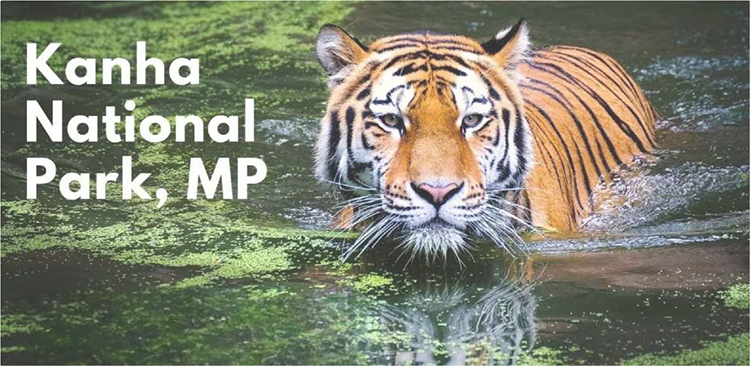
Kanha National Park, MP
Objective:
To assess whether GST can be integrated into ecotourism valuation by estimating the true economic value of the ecosystem using the travel cost method (TCM)
STEP 1: Step Estimating Tourist Willingness to Pay
| Cost Component | Average Cost (Rs.) |
| Transportation | Rs. 3,000 |
| Accommodation | Rs. 2,000 |
| Food & Local Transport | Rs. 1,000 |
| Safari & Entry Fee | Rs. 500 |
| Miscellaneous | Rs. 500 |
Indicates Tourists Value the Experience at around Rs. 7000
STEP 2:
Identifying Consumer Surplus
CURRENT ENTRY FEE: ₹500
ESTIMATED
WILLINGNESS TO PAY: ₹7,000
CONSUMER SURPLUS: ₹7,000-₹500 ₹6,500
SHOWS ECOSYSTEM SERVICES ARE SIGNIFICANTLY UNDERVALUED
STEP 3:
Linking Valuation To Gst
If A Green Gst / Ecotourism Conservation Cess Is Introduced:
Additional Tax: ₹300
Per Visitor New Price: 500+300 = ₹800
Since Tourists Already Spend ₹7,000
The Additional Tax Remains Affordable.
STEP 4:
Potential Conservation Revenue
ANNUAL VISITORS: 2,50,000
Additional GST revenue:
2,50,000 × ₹300 = 27.5 crore annually
This revenue can be earmarked for:
- Wildlife conservation
- Habitat restoration
- Forest protection
- Sustainable tourism management
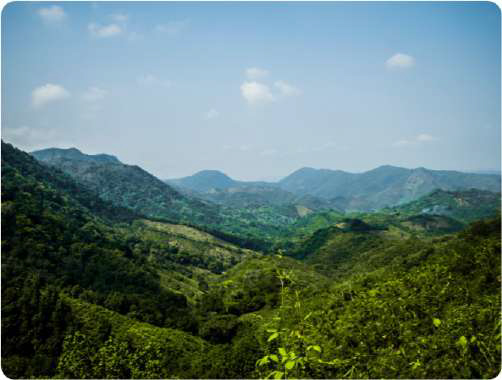
The Economic Reality of Pachmarhi
Using the Travel Cost Method (TCM) to Quantify Willingness to Pay
- The Concept: If a tourist spends money to get there, that cost reflects the minimum value they place on the ecosystem.
Component and Cost (₹)
- Transport & Accommodation – ₹4,500
- Food & Local Logistics – ₹1,200
- Entry Fees & Misc. – ₹800
- Total Travel Cost – ₹6,500
- The Consumer Surplus: While the entry fee is only *300, the total investment is 6,500
- 6,200 represents the “surplus” value tourists derive from landscapes, waterfalls, and biodiversity
The “Value Gap” & Undervaluation
Subheading: Comparing Ecosystem Worth vs. Actual Revenue Realization
Annual Visitation: ~500,000 Tourists
| Metric | Calculation | Economic Impact |
| Total Economic Value | 5L Tourists × ₹6,500 | ₹3,250 Crore |
| Current Entry Revenue | 5L Tourists × ₹300 | ₹15 Crore |
There is a massive undervaluation of Pachmarhi’s natural capital. We are providing ₹3,250 crore worth of “ecosystem services” but capturing less than 0.5% for its protection.
The Green GST Framework
- Subheading: A Scientific Basis for a Conservation Cess
- The Proposal: Introduce a Green GST / Ecotourism Cess of 200 per visitor.
- Why it works: Since tourists already spend 6,500, a ₹200 tax represents only a 3% increase in total trip cost-maintaining high affordability.
- Revenue Potential: * Generates ₹10 Crore annually in dedicated conservation funds.
- Fund Utilization:
- Biodiversity: Protecting Satpura’s endemic flora/fauna.
- Waste Management: Handling the footprint of 500,000 visitors.
- Community: Livelihood programs for local tribal populations.
“Although tourists spend nearly ₹6,500 to experience Pachmarhi, they pay only ₹300 in entry fees, highlighting the need for a Green GST to capture this hidden value for ecosystem conservation.”

CONCLUSION
- Ecotourism sites generate high Total Economic Value (TEV), but current revenue systems capture only a small fraction of this value.
- Existing GST framework focuses on direct consumption, ignoring environmental costs and ecosystem services.
- Tools like Shadow Pricing, CVM, and TCM reveal significant undervaluation and hidden consumer surplus.
- Introducing a Green GST / Ecotourism Cess can help internalize environmental externalities without significantly affecting tourist demand.
- Revenue earmarking (circularity principle) ensures funds are reinvested into conservation, restoration, and local livelihoods.
- A balanced GST approach can align economic growth with sustainability, transforming taxation into a tool for ecological protection.







Author Are
Reachers At IIFM Karseong