







MAKHANA AS A LOW-GLYCEMIC FUNCTIONAL FOOD: ITS ROLE AS A SUPERFOOD
Shivangi Tripathy, Nitish Kumar, Dr. Ritu Prakash Dubey
Abstract
Makhana (Euryale ferox), commonly known as fox nut or lotus seed, is an underutilized aquatic crop widely consumed in India and other Asian countries. Traditionally valued for its medicinal and dietary properties, makhana has recently gained global recognition as a low-glycemic functional food and superfood. Its favorable macronutrient profile, low fat content, rich mineral composition, and presence of bioactive compounds make it particularly suitable for individuals with diabetes, obesity, cardiovascular disorders, and metabolic syndrome. Makhana or gorgon nut is an important non-cereal food from aquatic resources. People now a day’s preferred to protein rich food in their eating habit for sound health as compared to carbohydrate-rich products.
Keywords: Makhana, Euryale ferox, low glycemic index, functional food, superfood, nutrition, diabetes.
1. INTRODUCTION: Rapid urbanization, sedentary lifestyles, and changing dietary patterns have led to a significant increase in non-communicable diseases such as diabetes, obesity, cardiovascular diseases, and metabolic syndrome. Diet plays a central role in both prevention and management of these conditions. In this context, low-glycemic index (GI) foods and functional foods are gaining increasing attention. Makhana (Euryale ferox) is an aquatic seed traditionally consumed in India, especially in Bihar, Uttar Pradesh, and parts of Eastern India. Historically used in Ayurveda and traditional Chinese medicine, makhana is now recognized for its nutrient density, low glycemic response, and functional health benefits. Despite its long history of consumption, makhana remains underexploited in scientific literature and food systems compared to other cereal and nut products. It generally produces edible nut and it is superb medicinal plant used in ancient medicine in India and China 3000 years ago. The seeds of fox nut are used in ayurvedic preparations. It contains 11.16% protein and 75.04% carbohydrates. It strengthens the heart and is very useful in anemia. Makhana is an important ingredient which is used to strengthen spleen and kidneys. It contains low sodium and high potassium which reduces Blood Pressure and since it contains a very low amount of monosaturated fat, which prevents to increase blood sugar level. Besides, B.P and diabetes also help to control diseases like neuralgia, incontinence, chronic diarrhea and arthritis. Euryale ferox seeds are a rich source of macronutrient like Ca and Mg and also many micro-nutrients. It is nutritious and easily digested [5]. Antioxidant activity of raw seed was maximum than that of popped ones, which was due to the outcome of processing at high temperature. Popped makhana is a well-known product in Mithilanchal of Bihar. Since ancient times, the people of the Mithila region using makhana for various domestic consumable products like popped, halwa and kheer. In Kashmir fruits are edible. The seeds are consumed in raw or roasted forms as well as f lour of dried seeds was used as nutritious bread Makhana contains unique glycosides combinations which are helpful for the element of cardiovascular diseases. Several studies found that foxnut has physical and hygroscopic characteristics that make it perfect for use in newborn formula. (Bana et al., 2015).
2. BOTANICAL DESCRIPTION AND CULTIVATION:
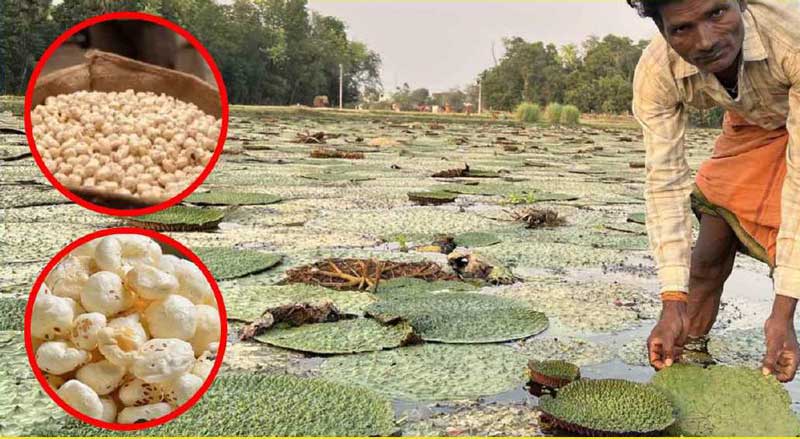
Makhana is derived from Euryale ferox, a floating-leaf aquatic plant belonging to the family Nymphaeaceae. The seeds are harvested from water bodies such as ponds, lakes, and wetlands
- Kingdom – Plantae
- Phylum – Angiosperms (flowering plants)
- Class – Eudicots
- Order – Nymphaeales
- Family – Nymphaeaceae (water lily family)
- Genus – Euryale
- Species – Euryale ferox
Common names for Euryale ferox include foxnut, fox nut, gorgon nut, makhana, and lotus seed. In regions of Asia, especially in India and China, this plant’s seeds are frequently employed in a variety of gourmet dishes and traditional medicines. They are prized for their dietary benefits and therapeutic qualities.
Importance of Cultivation
- Provides livelihood to rural communities
- Requires minimal external inputs
- Adapted to aquatic and semi-aquatic ecosystems
- Considered a climate-resilient crop
3. NUTRITIONAL COMPOSITION OF MAKHANA:
Makhana is nutritionally superior to many commonly consumed snacks due to its high carbohydrate quality, moderate protein, low fat, and rich micronutrient profile.
Table 1. Nutritional Composition of Makhana (per 100 g)
| Nutrient | Amount |
| Energy | ~350 kcal |
| Carbohydrates | 76-78 g |
| Protein | 9-10 g |
| Fat | 0.1-0.5 g |
| Dietary Fiber | 6-7 g |
| Calcium | 60 mgIron1.4 mg |
| Magnesium | 67 mg |
| Potassium | 500 mg |
| Sodium | <5 mg |
Source: Indian Food Composition Tables
4. LOW GLYCEMIC INDEX PROPERTY OF MAKHANA:
The glycemic index (GI) measures how quickly a carbohydrate-containing food raises blood glucose levels. Foods with a GI below 55 are considered low-GI. Low GI meals are shown to increase insulin sensitivity, fasting triglyceride levels, healthy body weight maintenance, and a significant reduction in health risk factors. (Livesey et al. 2008). Because they have a low GI, fox nuts completely meet the requirements for various non-communicable diseases. These nuts’ low GI is due to their complex carbohydrate content, which also makes them a fantastic snack for people with non-communicable diseases. The Canadian Diabetes Association has provided suggestions for low glycemic index foods as part of their nutrition treatment for diabetes patients. (Lawson et al. 2005).
Reasons for Low Glycemic Response
- High complex carbohydrate content
- Presence of dietary fiber
- Low fat and sugar content
- Slow digestion and absorption
Low in Calories & Fat
Makhana is much lower in calories than fried snacks and chips. It is ideal for weight watchers and individuals trying to reduce fat intake.
High in Protein & Fiber
Makhana keeps you full for a longer time. It prevents overeating and unnecessary snacking.
It is beneficial for individuals on weight-loss or muscle-building diets.
Low Glycemic Index
Makhana helps stabilize blood sugar levels. It is safe for diabetic individuals.
Naturally Gluten-Free
Makhana is suitable for people with gluten sensitivity or celiac disease.
Easy to Prepare & Versatile
It can be roasted, spiced, caramelized, or added to curries, kheer, and salads.
Light on Digestion
Makhana is soft and easily digestible. It is suitable for all age groups, including children, elderly individuals, and those with weak digestion.
Table 2. Comparison of Glycemic Index of Selected Foods
| Food Item | Glycemic Index |
| Makhana | 35-40 |
| White Rice | 70-75 |
| Wheat Bread | 65-70 |
| Cornflakes | 80-85 |
| oats | 40-45 |
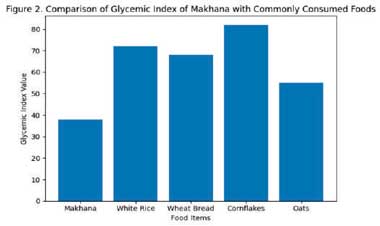
Implication: Makhana is suitable for diabetic diets and helps prevent post-prandial glucose spikes.
5. MAKHANA AS A FUNCTIONAL FOOD:
Functional foods provide health benefits beyond basic nutrition. Makhanafulfills this definition due to the presence of bioactive compounds such as flavonoids, polyphenols, and antioxidants.
Functional Attributes
- Antioxidant activity
- Anti-inflammatory properties
- Hypoglycemic effect
- Cardioprotective potential
Why Makhana is a Smart Snack Choice
- Fewer calories than fried snacks Suitable for those reducing fat intake
- High in Protein & Fibre Helps build muscle, supports weight loss, and keeps you feeling full.
- Low Glycaemic Index Stabilizes blood sugar levels, making it ideal for diabetics.
- Naturally Gluten-Free Suitable for individuals with gluten sensitivity or celiac disease.
- Easy to Prepare & Versatile Can be roasted, spiced, caramelized, or added to curries, kheer, and salads
- Light on Digestion Soft texture makes it suitable for all age groups, including children, elderly, and those with weak digestion.
6. HEALTH BENEFITS OF MAKHANA:
6.1 Diabetes Management
- Low Gl prevents sudden rise in blood glucose
- Improves insulin sensitivity
- Suitable as a snack replacement for refined carbohydrates
6.2 Weight Management and Obesity
- Low fat and calorie-dense but nutrient-rich
- High satiety value due to fiber and protein
- Helps control hunger and overeating
6.3 Cardiovascular Health
- Low sodium content supports blood pressure control
- Magnesium and potassium aid heart function
- Antioxidants reduce oxidative stress
6.4 Digestive Health
- Dietary fiber improves gut motility
- Prevents constipation
- Supports gut microbiota
6.5 Bone Health
- Calcium and magnesium contribute to bone density
- Beneficial for elderly and post-menopausal women
7. MAKHANA AS A SUPERFOOD
A superfood is defined as a nutrient-dense food offering exceptional health benefits. Makhana qualifies as a superfood due to:
- High nutrient density
- Low glycemic load
- Functional bioactive compounds
- Cultural acceptability and affordability
Table 3. Superfood Characteristics of Makhana
| Criteria | Makhana |
| Nutrient density | High |
| Glycemic response | Low |
| Processing requirement | Minimal |
| Cultural acceptance | High |
| Therapeutic potential | Significant |
8. PROCESSING AND CONSUMPTION:
Traditional processing involves roasting the seeds, which improves digestibility and shelf life.
Common Forms of Consumption
- Roasted snack
- Makhana flour
- Incorporated into sweets, porridges, and bakery products
Flow Chart 1.Processing of Makhana
Harvesting → Drying → Roasting → Popping → Grading → Packaging → Consumption
9. ROLE IN PUBLIC HEALTH AND NUTRITION SECURITY:
Makhana has significant potential in:
- Diabetes prevention programs
- School and community nutrition
- Diet therapy for lifestyle disorders
- Nutrition-sensitive agriculture
Its inclusion in public distribution systems and institutional diets could improve dietary quality in vulnerable populations.
11. CONCLUSION:
Makhana (Euryale ferox) is a low-glycemic, nutrient-dense functional food with strong potential as a superfood. Its favorable nutritional profile, combined with antioxidant and therapeutic properties, makes it an excellent dietary component for managing diabetes, obesity, and cardiovascular diseases. Promoting makhana through research, food innovation, and public health strategies can contribute significantly to sustainable nutrition and disease prevention.
REFERENCES
1. Indian Council of Medical Research. Indian Food Composition Tables.
2. FAO. Low Glycemic Index Foods and Health.
3. Srivastava et al., Journal of Food Science and Nutrition.
4. Gopalan et al., Nutritive Value of Indian Foods.
5. WHO. Diet, Nutrition and the Prevention of Chronic Diseases.
6. Kumar A, Jena HM. High surface area microporous activated carbons prepared from fox nut (Euryale ferox) shell by zinc chloride activation. Appl. Surf. Sci. 2015;356:753-761.
7. Kumar A, Jena HM. Preparation and characterization of high surface area activated carbon from fox nut (Euryale ferox) shell by chemical activation with H3 PO4, results phys. 2016;6:651-658.
8. Bana M and Gupta RK. “Formulation, nutritional and phytochemical analysis of ready to mix infant Food using Gorgon Nut, Samak Rice and Banana powder”. Journal of Pharmacognosy and Phytochemistry 4.4 (2015): 76.
9. Sundaram, P. K., Sarkar, B., &Mondal, S. (2014). Design and performance evaluation of pedal operated Makhana (Euryale feroxSalisb) seed grader. Research Journal of Agricultural Sciences, 5(3), 428-431.
10. Kumar, Lokender, Gupta, V.K., Jha, B.K., Singh, I.S., Bhatt, B.P., Singh A.K. (2011). Status of Makhana (Euryale feroxSalisb.) Cultivation in India, ICAR Research Complex for Eastern Region, Patna, Research Centre for Makhana, Darbhnga, Bihar-846005, India.
11. Jha V, Barat GK, Jha UN (1991) A Nutritional evaluation of Euryale feroxSalisb (Makhana). J Food SciTechnol 8: 326-328.
12. Jha V, Kargupta AN, Dutta RN, Jha UN, Mishra RK, Saraswati KC, Utilization and conservation of Euryale ferox Salisbury in Mathila (North Bihar), India. Aquatic Botany. 1991; 39(3-4):295-314



Authors
1. Ph.D Research Scholar, Department of Food Nutrition and Public Health, SHUATS Prayagraj, Uttar Pradesh.
2. P.hD Research Scholar, Department of Agricultural Extension & Communication, Naini Agricultural Institute, SHUATS, Prayagraj U.P.
3. Professor & Head, Department of Food Nutrition and Public Health, SHUATS, Prayagraj, Uttar Pradesh