









THE REMARKABLE COMMUNICATION SYSTEM OF WILD ANIMALS
Dr. A. D. Kholkute
Abstract
Wildlife communication is one of nature’s most sophisticated and adaptive systems. Despite lacking human technological tools, wild animals interact flawlessly through a complex network of sensory and behavioral signals. This paper explores the acoustic, visual, and olfactory communication mechanisms in wild species, particularly in Indian ecosystems such as Tadoba, Pench, and Nagzira. It also emphasizes the ecological significance of territorial marking, mating behavior, and the human responsibility in wildlife conservation.
1. INTRODUCTION:
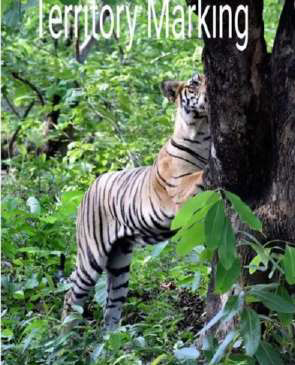
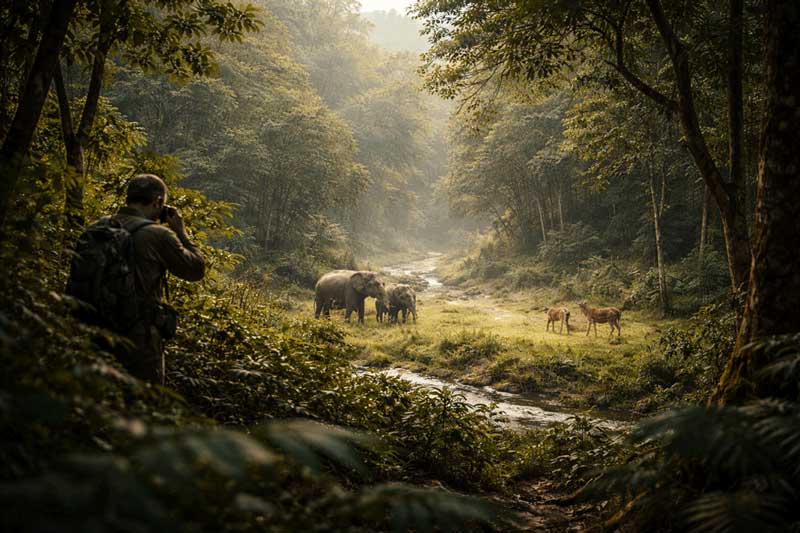
In recent years, wildlife tourism in India has increased significantly, with visitors drawn to national parks primarily to observe charismatic megafauna such as the tiger (Panthera tigris). However, most visitors remain unaware that animals are already aware of human presence long before being seen.
Unlike humans-who depend on advanced telecommunication systems, electricity, and network connectivity-wild animals rely on an innate communication system gifted by nature. This system never fails, for it is based on instinct, sensory evolution, and environmental adaptation. Wild animals utilize sound, smell, visual cues, and body gestures to detect the presence of others. In the wild, communication failure can mean death, as survival depends on awareness of both predators and prey. Every species occupies and defends a specific territory, ensuring access to food, shelter, water, and breeding grounds.
2. TERRITORIAL BEHAVIOR AND ECOLOGICAL COMMUNICATION:


Territoriality is a vital ecological behavior, especially in carnivores.
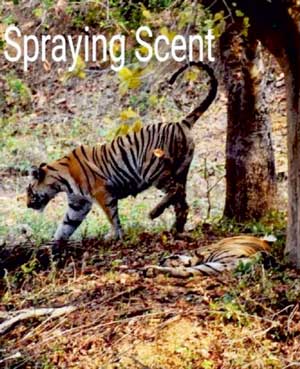
Species such as tigers, leopards, and wild dogs demarcate their territories using scent marking, clawing, and urine spraying. These markings inform others about the individual’s identity, status, and reproductive condition.
- A well-chosen territory usually includes:
- Dense vegetation for concealment,
- Reliable prey base,
- Permanent water sources, and
- Minimal human interference.
Male carnivores aggressively defend such territories, while females are permitted to enter for breeding. Reproduction generally occurs in these secure and resource-rich regions.
3. MODES OF COMMUNICATION IN WILD ANIMALS:
Wildlife communication can be broadly classified into three major signal types:
(a) Acoustic (sound-based),
(b) Visual or Optical (sight-based), and
(c) Olfactory (smell-based).
3.1 ACOUSTIC (SOUND) SIGNALS:
Sound communication is one of the most prevalent modes in the animal kingdom. Animals use different vocalizations for specific calls, contact calls, and territorial calls.
EXAMPLES INCLUDE:
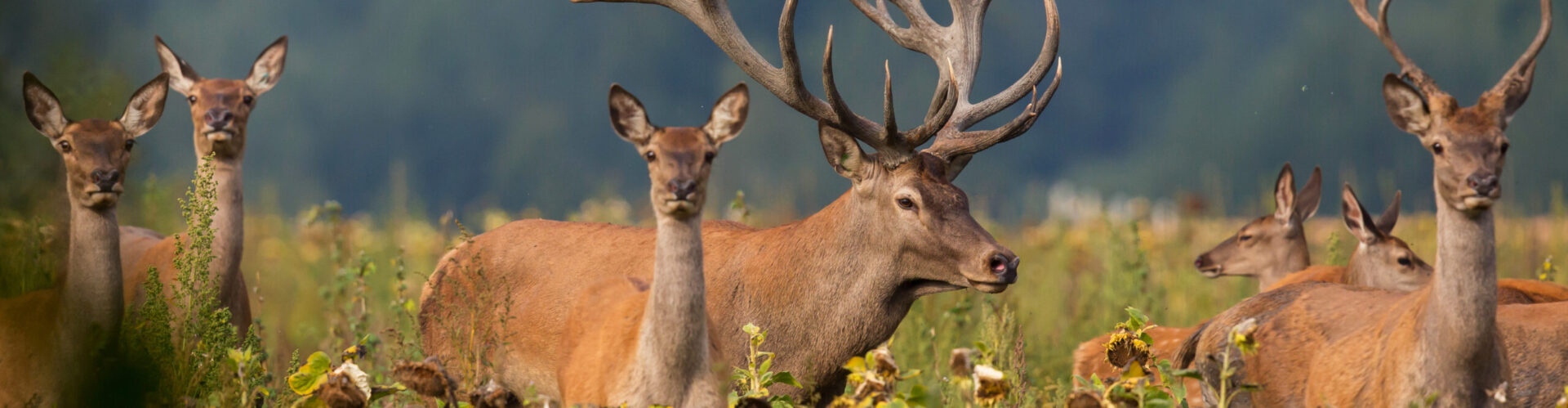
Deer (Sambar and Chital) produce short calls upon spotting humans but emit continuous calls when predators are nearby.
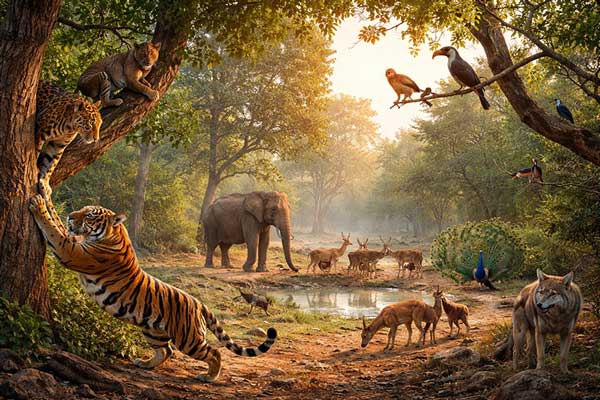
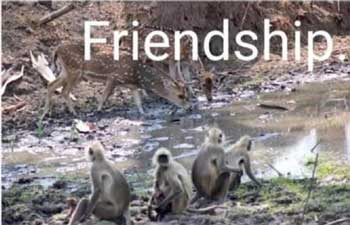
Monkeys and deer exhibit remarkable interspecies communication. Monkeys act as sentinels from treetops, issuing alarm calls to alert ground-dwelling deer. In return, deer aid monkeys by shaking fruit-bearing branches during foraging.
Each monkey troop is led by a dominant alpha male, whose loud calls and tail movements serve as both acoustic and visual warnings.
Large carnivores such as tigers and lions use roars to mark their presence. These roars can travel up to 7-8 km, establishing dominance and preventing conflict.
Even subtle behaviors-such as the sound pattern produced while drinking water-allow other animals to recognize species identity and assess nearby threats.
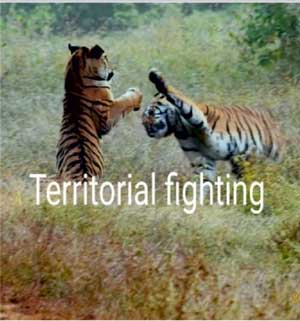
In the wilderness, survival belongs to the strong; territorial disputes between male tigers often end in violent combat, with the victor securing exclusive rights over the area.
3.2 VISUAL (OPTICAL) SIGNALS:
Visual communication is essential for both intra- and inter-species interactions. Wild animals visually mark their presence using trees, vegetation, and landmarks. This includes:
- Claw marks on tree trunks by tigers, leopards, and bears
- Horn or tooth marks by herbivores on bark
- Rubbing behaviors by bears and gaurs that spread scent from the body onto trees
- Mud smearing and urination by deer and wild boar to strengthen scent marks..
Dominant males such as blackbucks often display from elevated grounds to signal territorial ownership.
Male monkeys exhibit visual displays-such as genital presentation or tail movements to assert dominance or attract mates.
Herbivores stamp their hooves when alarmed, while birds emit sharp distress calls upon detecting predators.
3.3 OLFACTORY (SMELL) SIGNALS:
Olfactory signaling is perhaps the oldest and most reliable form of animal communication. Wild animals use urine, feces, and glandular secretions to convey messages related to territory, identity, and reproduction.
FOR EXAMPLE: Foxes, wolves, and wild dogs frequently urinate in groups at fixed points to mark collective territories. Monkeys urinate on their limbs and spread the scent along branches while moving, combining urine odor with glandular secretions.
Members of the cat and dog families possess well-developed anal glands that release species-specific scents.
Scent glands also exist on various body parts-tail, abdomen, forehead, and antlers.
Deer species such as chital and sambar rub their velvet-covered antlers on smooth branches, leaving both visual and scent cues.
Many antelopes possess preorbital glands below the eyes that secrete oily pheromones used for marking.
During the breeding season, olfactory signals play a crucial role.
Sex pheromones (notably copulins in females) act as natural chemical perfumes, attracting males and stimulating mating behavior.
Thus, acoustic, visual, and olfactory signals function synergistically to facilitate reproduction and social harmony.
4. ECOLOGICAL SIGNIFICANCE AND CONSERVATION IMPLICATIONSI:
These communication mechanisms are fundamental for maintaining ecological balance and minimizing interspecies conflict.
Wild animals mark territories and signal their presence to avoid confrontation, ensuring peaceful coexistence.
Remarkably, these scent marks persist for long durations, unaffected by rain or sunlight-a testament to nature’s resilience.
Such cues explain how researchers, through radio collar tracking, discover tigers migrating over 300 kilometers from their native range.
The conservation message is clear:
Safeguarding this intricate natural system is a shared human duty.
Protecting forests, wildlife, and their habitats ensures the survival of future generations.
5. GUIDELINES FOR RESPONSIBLE WILDLIFE TOURISM:
Visitors to wildlife reserves must strictly follow park regulations.
Reckless behavior-such as driving too close to tigers for photographs-can alter animal behavior and provoke aggression.
Tourists should:
- Avoid bright clothing and perfumes (which may attract insects or disturb animals),
- Maintain silence and safe distance,
- Respect the natural behavior of wildlife, and
- Support conservation through responsible tourism. Enjoy nature, but never disturb its inhabitants.
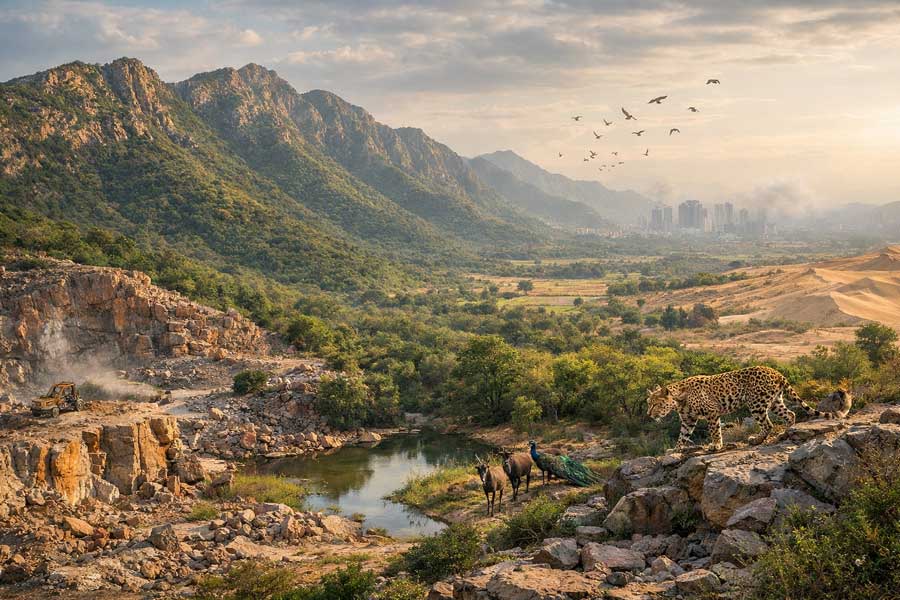
- If we fail to preserve this geography, we too will become part of history.
ACKNOWLEDGMENT:
The author expresses sincere gratitude to all Forest Department officers, staff, and collaborators for their continuous support and invaluable knowledge sharing, which made this study possible.
CONCLUSION:
Wildlife communication exemplifies the intelligence of evolution and the balance of ecosystems.
Understanding these systems deepens our respect for nature and highlights the urgent need for collective conservation efforts.
Save Nature, Save Wildlife. Jai hind.

Author
Retired Wildlife Veterinarian, Nagpur (India)
Contact: 9822718291