






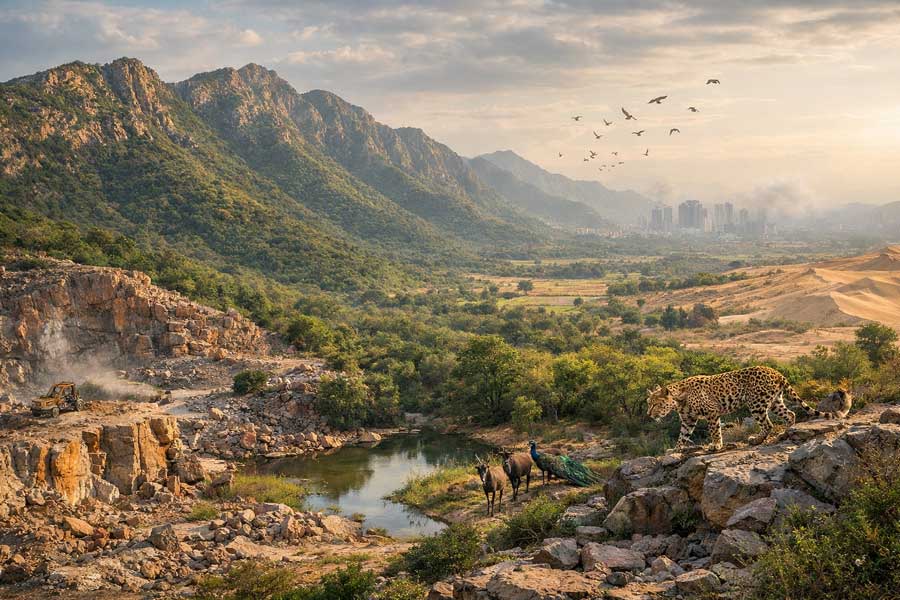

ΕΤΗΝΟΒΟΤΑNICAL STUDIES OF THE SACRED GROVES OF PRAYAGRAJ DISTRICT, UTTAR PRADESH
Ashish Kumar Yadav1 Darshita Rawat2 Dr. Kumud Dubey3
Abstract
The sacred groves of Prayagraj district in Uttar Pradesh represent unique repositories of biodiversity, cultural traditions, and indigenous knowledge systems. Spread across rural landscapes, these groves are remnants of ancient forest patches preserved due to religious beliefs, social customs, and ritualistic practices. Ethnobotanical studies of these groves reveal not only the floral richness but also the intricate relationships between local communities and plant resources. This article synthesizes existing literature, field observations, and ethnobotanical accounts to present a comprehensive overview of the vegetation, cultural significance, traditional uses, conservation status, and challenges facing the sacred groves of Prayagraj. The study further explores the role of sacred groves in ecological balance, socio-cultural identity, and sustainable resource use, and proposes strategies for their preservation amidst rapid socio-economic change.
1. INTRODUCTION
1.1 Background:
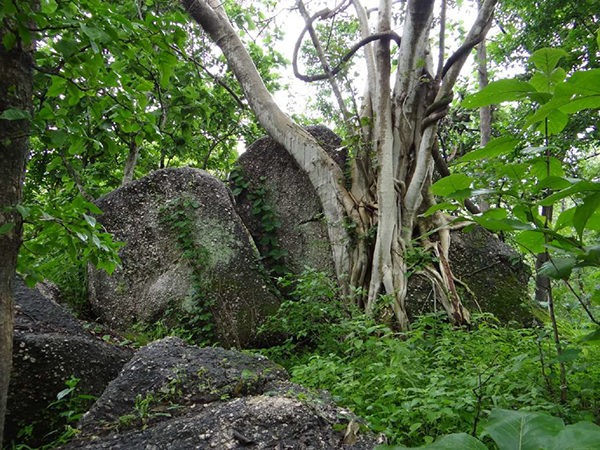
Sacred groves are tracts of vegetation-ranging from small woodlands to larger forest patches-preserved by local communities for religious, spiritual, and cultural reasons. Across India, sacred groves have served as reservoirs of biodiversity and as living museums of traditional ethnobotanical knowledge. In the Gangetic plains, including the Prayagraj district of Uttar Pradesh, sacred groves have historically been associated with village deities, local gods and goddesses, and animistic traditions that predate organized religion.
1.2 Study Area: Prayagraj District
Prayagraj district (formerly Allahabad), located at the confluence of the Ganga, Yamuna, and mythical Saraswati rivers, is a region steeped in mythological traditions and pilgrimage culture. The district’s landscape comprises fertile alluvial plains, riverine tracts, canal systems, and patchy forested areas. Embedded within this culturally rich terrain are numerous sacred groves-locally known as “Deoradis,” “Sarna,” “Jhaar” or “Devban”-each with distinct botanical assemblages and ethnocultural significance.
1.3 Objectives of the Study
This article aims to:
1. Document the flora of sacred groves in Prayagraj.
2. Assess traditional uses of plant species by local communities.
3. Analyze the cultural and ecological significance of sacred groves.
4. Evaluate conservation status and threats.
5. Recommend measures for sustainable management and integration into broader conservation frameworks.
2. CONCEPT AND CULTURAL SIGNIFICANCE OF SACRED GROVES
2.1 Conceptual Understanding:
Sacred groves are defined as forest patches conserved through religious norms, community taboos, and customary laws. These patches are usually considered abodes of deities, spirits, or ancestors, and are protected through non-formal regulatory systems embedded in local belief structures. In Prayagraj, groves are commonly linked to village guardian deities or places where mythic events occurred, giving them a sacred identity.
2.2 Cultural Roots and Local Beliefs
In Prayagraj, sacred groves are intertwined with Hindu cosmology, local folklore, and animistic traditions.

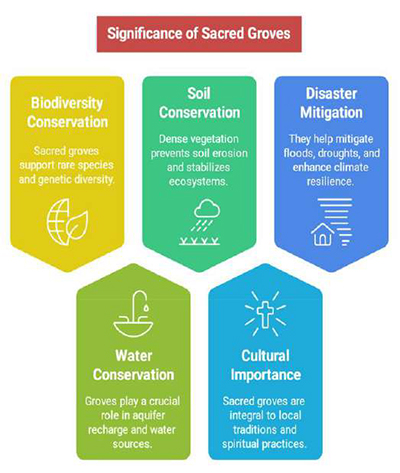
For example:
- Groves near ancient temples are believed to house grama devatas (village deities) that protect the community from calamities.
- Some groves are associated with festivals, annual fairs (melas), and ritual offerings involving specific plant species.
- Many communities believe that felling trees within the grove incurs divine punishment, disease, or misfortune.
These beliefs reinforce the conservation ethos and prohibit extraction or destruction of vegetation within these sites.
3. VEGETATION COMPOSITION AND PLANT DIVERSITY
3.1 General Floristic Profile
Sacred groves in Prayagraj host a diverse array of taxa including trees, shrubs, climbers, herbs, grasses, and medicinal plants. Although small in area, these groves often contain species that are rare or locally uncommon due to protection from anthropogenic exploitation.
3.2 Trees and Woody Species
Prominent tree species documented in sacred groves include:
Ficus religiosa (Sacred fig) – religiously significant and ecologically foundational.
Ficus benghalensis (Banyan) – holds cultural reverence; supports epiphytic biodiversity.
Azadirachta indica (Neem) – medicinally valued and locally protected.
Tamarindus indica (Tamarind) – culturally used in rituals and community gatherings.
Terminalia arjuna – valued for medicinal bark extracts.
3.3 Shrubs, Climbers, and Understorey Flora
Understorey vegetation contributes to habitat complexity:
- Zizyphus mauritiana – fruits used for food and traditional remedies.
- Woodfordia fruticosa – flowers used in traditional dyeing and religious rites.
- Climbers like Ventilago madraspatana and Cocculus hirsutus add structural diversity.
3.4 Herbs, Medicinal, and Ethnobotanically
Important Plants Sacred groves conserve numerous herbs with traditional uses:
- Ocimum sanctum (Tulsi) – sacred and medicinal.
- Aegle marmelos (Bael) – fruits and leaves used in rituals and medicine.
- Asparagus racemosus (Shatavari) – valued in Ayurvedic formulations.
- Adhatoda vasica – used in respiratory treatments.
These species are integral to local health practices and cultural ceremonies.
4. ΕΤΗΝΟΒOTANICAL USES AND TRADITIONAL KNOWLEDGE
4.1 Medicinal Uses
Sacred groves are living pharmacies. Local healers and villagers use plants for ailments ranging from digestive disorders to fevers and skin diseases. Examples include:
- Neem leaves for antiseptic washes.
- Bael fruit pulp for gastrointestinal disorders.
- Tulsi extracts for respiratory support.
- Arjuna bark for cardiovascular health.
Traditional medicine practices are transmitted orally, and many remedies are still in active use within households.
4.2 Ritual and Religious Uses
Plants from sacred groves are central to rites and ceremonies:
- Ficus religiosa leaves are used in worship and festivals.
- Tulsi is worshipped daily in many households.
- Flowers from groves are offered in temples and during festivals like Navratri and Diwali.
4.3 Socio-economic Uses
While extraction from groves is generally prohibited, certain non-destructive uses such as collection of fallen leaves, fruits, or flowers-provide minor economic benefits. Additionally, some groves support beekeeping or honey collection under controlled community norms.
4.4 Traditional Conservation Ethics
Sacred groves encapsulate traditional rules such as:
Totemic restrictions: Certain species are taboo to cut due to their association with specific deities. Seasonal restrictions: During festival periods, harvesting of any plant material may be prohibited. Collective sanction: Violations of grove norms can lead to social sanctions.
These practices, though informal, have effectively conserved biodiversity for generations.
5. ECOLOGICAL IMPORTANCE
5.1 Biodiversity Refugia
Despite their limited size, sacred groves act as micro-refugia for many plant species, including some that are locally rare or absent from surrounding agricultural landscapes. They also provide habitat for insects, birds, reptiles, and small mammals, enhancing regional biodiversity.
5.2 Soil and Water Conservation
Vegetation in groves stabilizes soil structure, reduces erosion, and improves water infiltration. Root systems enhance soil organic matter and microbial activity, benefiting adjacent lands.
5.3 Climate Resilience and Ecosystem Services
Sacred groves contribute to carbon sequestration, micro-climate regulation, and maintenance of pollinator communities. In the context of increasing climate variability, these functions are critical for sustaining agro-ecological landscapes.
6. THREATS AND CONSERVATION CHALLENGES
6.1 Anthropogenic Pressures
Sacred groves in Prayagraj face multiple threats:
- Encroachment due to expanding agriculture or infrastructure development.
- Unregulated grazing that degrades understorey vegetation.
- Extraction of fuelwood and fodder as traditional norms weaken.
- Pollution from nearby settlements.
Modernization and shifts in cultural practices have reduced traditional reverence, making some groves vulnerable.
6.2 Loss of Traditional Knowledge
With generational shifts, oral knowledge about plant uses and grove rituals is declining. Younger community members often migrate for education or employment, breaking continuity of customary practices.
6.3 Legal and Institutional Gaps
Many sacred groves lack formal legal protection under forest or biodiversity laws. Absence of recognition limits access to conservation funding, technical support, or inclusion in government-led protection programs.
7. CASE STUDIES FROM PRAYAGRAJ
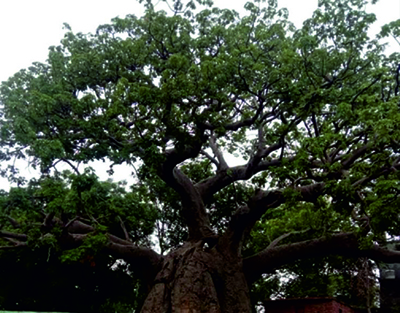
7.1 Grove A: Devi Sarna, Village X
In the village of X, the Devi Sarna grove is an example of a well-preserved site:
- Dominant species: Ficus religiosa, Azadirachta indica, Zizyphus mauritiana.
- Ritual use: Annual festival honoring the village goddess involves offerings of flowers and lamps.
- Community role: A local council enforces grove norms and organizes clean-up drives.
This grove exhibits high floristic richness due to strict observance of taboos.
7.2 Grove B: Gram Devta Jhaar, Village Y
The Gram Devta Jhaar serves as a shrine for the village deity:
- It is smaller but significant due to perennial medicinal herbs like Ocimum sanctum and Adhatoda vasica.
- Elders possess rich ethnobotanical knowledge of herbal remedies used in seasonal ailments.
7.3 Grove C: Sarna, Village Z
This grove demonstrates the impacts of socio-economic change:
- Increased grazing and extraction have reduced shrub cover.
- Younger generation shows limited interest in grove traditions.
- Efforts by local NGOs to document plant uses and train community youth in conservation have shown promise.
8. CONSERVATION STRATEGIES AND POLICY IMPLICATIONS
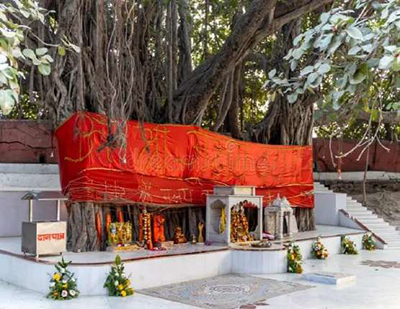
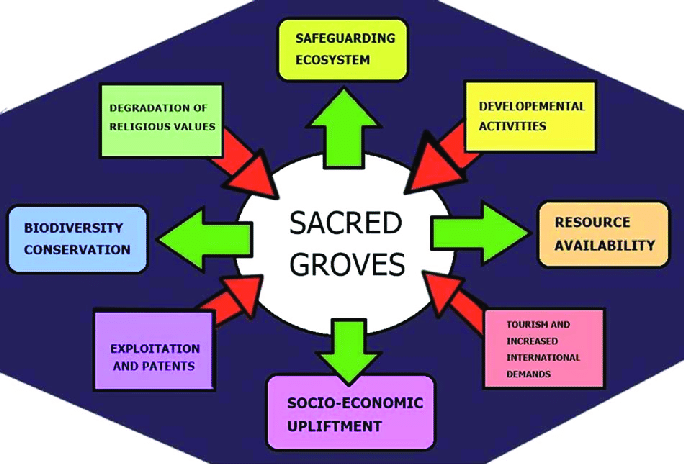
8.1 Community-Based Management
Empowering local communities remains essential. Strategies include:
- Revival of festivals centered on grove protection.
- Documentation of indigenous plant knowledge.
- Formation of local conservation committees.
8.2 Legal Recognition and Support
Integrating sacred groves into statutory conservation frameworks can provide:
- Financial incentives for protection and restoration.
- Technical support for biodiversity enhancement.
Examples of mechanisms include recognition under the Biological Diversity Act and local planning instruments.
8.3 Educational and Awareness Programs
Schools and community centers can incorporate grove ecology into curricula. Awareness campaigns on the value of native plants and sustainable use can revive respect for sacred groves.
8.4 Scientific Documentation and Research
Systematic floristic studies, GIS mapping, and ethnobotanical surveys can:
- Create baseline data for monitoring.
- Support conservation planning and ecological restoration.
Collaborations between local institutions, universities, and government agencies are key.
8.5 Restoration Ecology
Degraded groves can be restored through:
- Native species replanting programs.
- Controlled grazing regulations.
- Soil and water conservation measures.
9. CONCLUSION
The sacred groves of Prayagraj district embody an invaluable intersection of biodiversity conservatior and cultural heritage. These small but ecologically rich patches reflect centuries of indigenous stewardship and traditional ecological knowledge. Ethnobotanical studies reveal that sacred groves are not only repositories of plant diversity but also living laboratories of cultural practices and sustainable resource use. However, rapid socio-economic transformations and erosion of traditional norms have placed these groves under threat. Conservation of sacred groves requires an integrated approach combining community participation, legal support, scientific documentation, and educational outreach. Recognizing sacred groves as both cultural landscapes and ecological hotspots will ensure their persistence for future generations and contribute meaningfully to regional biodiversity conservation goals.

Project Fellow

Research Scholar

Senior Scientist
Authors:
Indian Council of Forestry Research and Education -.
Eco- Rehabilitation Centre
(ICFRE-ERC), Prayagraj, UP